Die on this Hill
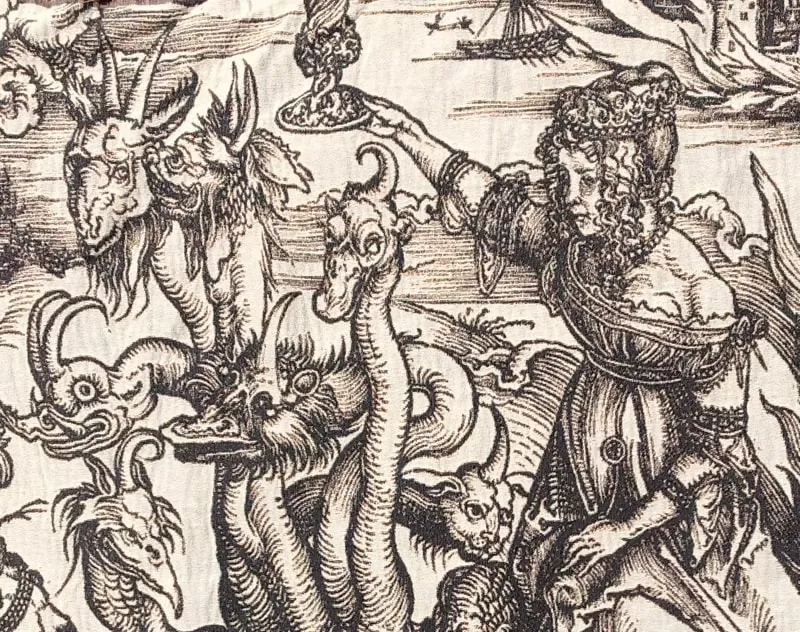
You might be wondering why I cut off the previous chapter without finishing our discussion of envy and before we got to the last plague, which is obviously wrath. There’s a very good reason, which you will shortly see, and it has everything to do with the seven kings, whose identities I will reveal in good time. For now, let’s take a look at what Revelation says about Armageddon, and tidy up the sixth plague.
15 “Look, I come like a thief! Blessed is the one who stays awake and remains clothed, so as not to go naked and be shamefully exposed.”
16 Then they gathered the kings together to the place that in Hebrew is called Armageddon.
Remember that Revelation is a path that we walk, with a designated beginning and end. This coming battle is inside us. Armageddon comes from the Hebrew phrase Har Megiddo, which means the Hill of Megiddo. The name “Megiddo” can be translated as “place of troops” or “a gathering of marauding bands.” Other interpretations include “place of many organisms” or “crowded place.” Megiddo is the hill that we have to climb in order to put our envy behind us. Hills and mountains give us a change in perspective. Part of us has to die on that crowded hill.
The frog spirits come from the mouths of fantasy creatures. They represent things we tell ourselves, things we tell others, or things others tell us. They make us think we are special, and make us want others to see us as special, too.
One tells us we are a mythical creature, like a dragon, that devours its enemies with its fiery breath. The second tells us that we have been given a formula for success, because God loves us more than anyone else. The third tells us that we are the voice of God, speaking His words, and fulfilling His mission on earth. All three of these perspectives are unrefined. It’s true, we can do things no one else is able to do, but every life is special. We shouldn’t forget that, or our envy will get out of hand.
Kindness is the treatment for envy.
You see, envy is a hole that we feel inside us, that we tell ourselves needs to be filled. Without kindness, we will fill that hole with all sorts of fantasies. Kindness is born from understanding. It reminds us that we are not alone, and that becoming the object of someone else’s envy will not help us treat our own. Understanding ourselves and others allows us to realize just how special we all are in God’s eyes. We are all in this together.
Deep down, we don’t like envying other people. If we love God and love our neighbors as ourselves, then we should refrain from making others envy us. This doesn’t mean that we should refrain from investing in our talents. It just means that we should also assist others in their own investments. Envy is a part of us, as are the other vanities. None of them are going away. That being said, we must remember that there is a way to deal with them that is edifying for all of us. This is why Armageddon is fought on a hill that is a place of many. When we see ourselves as part of the group, then we can no longer stand apart from it.
Many of us would do anything for our family. We have twisted the phrase “blood is thicker than water” to mean that family is more important than non-family. The true phrase didn’t mean this at all. In fact, it was the opposite. Ancient people would bind themselves with blood oaths. The phrase was meant to mean that the blood of the oath was thicker than the water of the womb, which broke when we were born.
Ancient people also hid themselves inside walled cities and were fearful and distrustful of strangers. The people of Sodom only played their tricks on outsiders. They treated their neighbors differently. With Christ’s help, the whole world can become our neighborhood. To win the battle of Armageddon, we have to embrace the world, not wage war against it. We must allow everyone to stand on our hill, alongside us.
The rulers of the world are the people and things that control us, or that we put above ourselves, whether we love or hate them. Envy wants to make them bow down before us, so they can look up to us, for a while. Instead, we must stand with them, as one, so that our shared New Jerusalem doesn’t fall. The plagues are the end of our fantasy, but there can be no sickness in heaven, so there is no peace while we are at war with ourselves and the world.
The battle of Armageddon is not just fought by religious leaders. It is waged inside of anyone who is an idol to someone else, and anyone who holds up another person as an idol. Winning it requires us to wrestle with our envy. We should not need to meet our heroes to know that they are human. We can applaud their abilities without placing them on a pedestal. Like Jesus, the Son of Man is no respecter of persons. He is a lover of people who understands that there is a fine line between love and obsession.
Thieves are opportunistic. They are always on the lookout for a chance to take what is not theirs. In this verse, John does not tell us who is speaking, so we assume it is Jesus, but it is actually our envy speaking. Let us not forget, though, that our vanities each have their own angel, and angels are nothing more than messengers from God. He is telling us that jealousy is out to take the things we have worked so hard to accumulate: the pieces of our uniform, which define us as a Son of Man.
So many people who think themselves great have their images tarnished when they are exposed as “only human.” We build an image of ourselves that is nothing more than a facade, or we build an image around the people we obsess over, that they can not possibly live up to. When our perspective is corrected, and when people see us clearly, then shame comes to fill the empty hole, because nature abhors a vacuum. Shame for us, and shame for them, and there is only one place that shame leads. Wrath is the place where all the other vanities take us. It is the seventh plague.
17 The seventh angel poured out his bowl into the air, and out of the temple came a loud voice from the throne, saying, “It is done!”
Wrath is an airborne contagion. It can spread from person to person, without the need for us to come in contact with each other. In this modern world, we can become angry across great distances, over things that are happening in places we have never been. Our anger fills us with hot air, which we must expel so that we do not burst. There is only one treatment for wrath. We must take a breath and wait for it to clear up on its own. It is a momentary fever that goes away when cooler heads prevail.
Patience turns wrath into a blessing.
I always believed that turning the other cheek was an acceptance of weakness, and that we were supposed to do it as an admission to the world that we could not stop evil from flourishing. I was wrong. Heath Ledger’s performance in The Dark Knight showed me otherwise. Mind you, I had watched that movie about a dozen times and never noticed it until I began holding up my questions. Then one morning it came to me. When Batman is beating up the Joker in a holding cell, and the Joker says, “You have nothing to threaten me with!”, it occurred to me that he was turning the other cheek, and that it came from a position of strength, not weakness.
The Joker had nothing to lose. Likewise, as Sons of Man, when we place all of our concerns in God’s hands, we can find a similar strength, knowing that whatever happens is His will.
The loud voice that tells us, “It is done!” comes from the temple, which is where God worships. This means that it is His desire that comes to fruition. It is a reminder that He will always get what He wants, but we must also remind ourselves that His will is in our best interest, even if we can’t understand His rationale. This understanding does not sit well with us, because we cannot sit well in it. It does not feel like a throne.
18 Then there came flashes of lightning, rumblings, peals of thunder and a severe earthquake. No earthquake as it has ever occurred since mankind has been on earth; so tremendous was the quake.
I have mentioned epiphanies before, and how they are lightning strikes in our brain that shatter our perceptions. The original definition of the word “epiphany” was “the revelation of Christ to the Gentiles.” Today it is defined as “a sudden revelation”, which still fits, because all revelations are revelations about God, even if we don’t recognize them as such. Every new piece of understanding brings us closer to Him. Every question answered fills us with new questions, because there is seemingly no end to God’s wonder.
The lightning strike is just the first part of the epiphany storm. Next comes the thunder, which takes time and patience, because understanding takes time and patience. The first jolt only lets us know that things are not as we perceive them to be. To get the full picture, we have to wait for the thunder to stop rolling. Then, and only then, does the ground beneath us shake. It does so because we realize the hill we have been fighting on isn’t a sturdy one. Our position is either weaker or stronger than we initially thought.
It is no easy task putting all of our cares in God’s hands. Trusting in something we cannot see is the biggest leap of faith we can take. This is why this earthquake is like none other that has ever occurred on earth. It doesn’t mean it only happens once. Every person who reaches this point in their revelation journey experiences this world-shaking event.
Imagine being the first person on earth to believe in and fully trust a deity. Put yourself in their shoes. The looks they got are the same ones we get to this day. Trusting God is not natural. It defies human logic. Letting an unseen entity take control of our lives and our stuff is not normal human behavior. Our instinct is to clutch the things we love and hold them tight, but in an earthquake it is hard enough just to stay on our feet.
Earthquake survival guides tell us to drop to the ground, find cover, and hold on. This is good advice for spiritual quakes, as well. We should drop to our knees, remind ourselves that God’s hands are covering us, too, and hold on to our faith and the practices that got us to this point until the shaking is over and the epiphany is crystal clear.
That being said, we have to remember that this is a partnership, and we must do our part. The Arabs have a saying, “Trust in God, but tie your camel.” We build earthquake-proof buildings because God inspires us to do so. Our goal is to overcome the world and all of its challenges. We cannot do it alone, and we must keep in mind that God made the world as a training ground for us, so that we could learn to walk properly.
19 The great city split into three parts, and the cities of the nations collapsed. God remembered Babylon the Great and gave her the cup filled with the wine of the fury of his wrath.
Building the great city of New Jerusalem is a team effort that requires good communication. Its three parts are God doing His part, us doing our part, and the Holy Spirit connecting us as our primary line of communication and reference. I say reference, because we must not allow ourselves to forget that God’s intentions (His spirit) toward us are always good.
The cities of the nations are the connections we built when we learned not to trip over our wings, or be blinded by them. They are cities in the sky, because we have learned to fly by putting away our selfishness and filling the role we were meant to play. They collapse when we realize that we didn’t really build anything. It was always God, working behind the scenes.
Even in John’s time, the Jews had a bad taste in their mouths because of the Babylonian captivity. During those 500 years, they forgot a lot of things, while trying their best to cling to all of the things they loved. Their religion was shaken, but not their faith. They questioned their own understanding, but not God’s intentions. They blamed themselves for the quake that nearly crushed their system of belief, even as they passed down the story of Job and told their children that Job did nothing to deserve the bad things that happened to him. In that story, God takes full responsibility for the destruction of Job’s life, and He did it so that He could take the devil for a walk and turn it into a teachable moment for everyone concerned.
Babylon the Great is the place where we forget, but we only forget because God places a veil over our memory. We forget that God loves us. We forget that we should love ourselves, because we are worthy of love. We forget that we should love our neighbor, because they will one day be one with us, and we forget that we are all one with God, and therefore we are God.
Armageddon makes us want to stand alone, on our hill, fighting against the world, and the God who made it. Babylon the Great offers us hanging gardens, because a garden in the air is not affected by shaking ground. We are overcome with anger when we forget ourselves. We only hate what we do not understand.
20 Every island fled away and the mountains could not be found.
There is nowhere left to hide. Islands give us refuge from the sea. They are bits of truth in a philosophical deluge. We are not creatures of the water. We live most of our lives on land, because solid ground is a comfort to us. In a spiritual flood, we lose sight of what is real, and what is true. We imagine all sorts of hungry beasts in the waters around and beneath us. For most of us, there is something unsettling about miles of water under our feet. We must overcome our fear to swim in the deep. We must trust that even if we are eaten, it was God’s will.
Jonah found peace in the mouth of a great fish. When the petty philosophies of his day tried to drown him, he was swallowed up in the knowledge that something more important was happening.
Jonah was dispatched by God, to warn the people of Nineveh that their judgment was at hand. Google tells us that Nineveh was renowned for its militarism, institutional cruelty, and widespread idolatry. Its military was notoriously merciless. Conquered captives were routinely subjected to torture, including being flayed alive, impaled, or having their tongues torn out. That’s no way to treat your neighbors.
Nineveh was called the “Bloody City” by the prophet Nahum. The Assyrians who inhabited it were heavily entrenched in the pagan worship of false gods, practicing witchcraft and sorcery, and holding other cultures in supreme contempt. We don’t need Google to tell us what the symbolism of those things mean. I have already spelled them out in this book.
The Ninevites were very much like the Sodomites, except that instead of waiting for strangers to wander into their city, they took their army out and invaded the cities around them. Like the Sodomites, they had a very narrow view of who their neighbors were. If you were one of them, you could do no wrong. If you weren’t, then you could do no right.
Jonah was terrified of going to Nineveh, and rightly so. They didn’t like strangers. In order to escape God’s plan, he tried to flee to Tarshish.
Unlike Nineveh, Tarshish looked on everyone as their neighbors. They were seafaring traders who traveled the known world. Their ships would set off on three-year expeditions, bringing back all sorts of riches to their home city.
Knowing this, makes the story of Jonah much more symbolic. He let his fear guide him toward a comfortable place, where he would be accepted, instead of a dangerous one, where the possibility of a horrible death loomed on his horizon. The thing that saved him, was something large, moving under the surface, out of sight.
That’s what fish do. They live in a mysterious realm we rarely get to see. Imagine how little Jonah and the people of his time knew about the world below the waves. Even today, we understand that there is a lot going on down there, that we don’t understand.
The disciples used the symbol of a fish. Their exact reasoning for this is not known to us. Maybe, like Jonah, they realized that there were things moving under the surface (behind the scenes) that they did not understand?
Jonah’s sacrifice was profound. He decided that he, alone, should suffer the consequences of his actions. He did not want to drag other people (those on the ship) into his drama.
Inside the great fish, Jonah repented and promised to do the Lord’s will. When he was vomited out onto dry land, he went to Nineveh and warned them. They all listened to his warning, even the King.
If we consider what ships are, symbolically, and what dry land represents, then we can see that the story of Jonah is completely encased in symbolism. Whether or not it happened, doesn’t matter. There is still a lot that we can learn from it. In fact, Jonah might never have seen the sea, much less traveled on it. He might have been a fictional character, like the ones in Grimm’s fairytales. Regardless, there is a moral to his story.
Mountains are high places, where we can improve our perspective. We climb them to get a look at the bigger picture. We use them as navigational aids. Without them, we have fewer landmarks to travel by. Plains are flat and boring, but they also leave us without any shelter in sight, and nothing by which to take our bearings.
21 From the sky huge hailstones, each weighing about a hundred pounds, fell on people. And they cursed God on account of the plague of hail, because the plague was so terrible.
Small hailstones can do considerable damage to cars and windows and things that are easily broken. Hundred pound hailstones would destroy buildings, and wipe out cities. There would be few places to hide from them, except deep caves. Even then, if one hit the entrance, we would be buried alive.
Hail is frozen water. Symbolically, it represents philosophy that has become truth, in our minds. It is a false truth, though, because ice melts under heat, which is scrutiny. Our wrath makes us believe things that are not true, things that are easily proven as false, if we only take the time to scrutinize them.
To dissipate the heat that is growing in our head, we must allow the air to carry it away. We must ventilate it. We must breath in, as God breaths out. This is not our instinct. We want to get rid of the heat by breathing it out all over the thing that has made us angry. We want to become a fire breathing dragon, but we must remember that we are not mythical creatures. We are Sons of Man.
Jesus compared Satan to a prancing lion. The thing is, lions don’t prance, they stalk. When his own devil danced in front of his eyes, daring him to rip Peter’s head off, Jesus did something unnatural. He turned away, and oriented himself toward the light. Our wrath urges us to prove to the world that we are not weak, but our apparent strength is a flaw in our perspective. It is a beam in our eye.
Jesus accepted that God made Peter to be Peter, and that meant that even though he was a doubter, his doubt flowed from his love and loyalty. Peter had a beam in his own eye. He wanted a different sort of Messiah than the one Jesus was becoming. Many of the disciples wanted a strong ruler, who would free the Jews from Roman oppression.
The Jews, themselves, wanted another David, who would slay their Goliath for them. They wanted this, because they took the story of David and Goliath as fact, not symbolic fiction. I’m not saying it didn’t happen, I’m saying their understanding of the events was wrong.
The Israelites were afraid of a giant. Instead of putting their faith in God, they placed it in themselves and found themselves wanting. This made David angry. He believed that if God was on their side, no one could stand against them. He was right. He hit Goliath with a stone from a slingshot. He spun it around and smacked him in the forehead with it. In other words, he turned the tables on Goliath. Here was a giant of a man who everyone feared. Everyone got out of his way. No one dared challenge him, because he looked so big, and we associate big with strong. We even picture Samson as a man with large muscles, but truly, wouldn’t his story be more miraculous if he were a scrawny twerp?
Anyway, Goliath had this image of himself that was fed by the actions and words of other people. That image fractured when a young boy stood against him and dared to challenge him. David’s confidence made the giant wonder just how strong he actually was. You see, inside, Goliath knew he was no real champion. He only won battles because his opponents were gripped by their fear. He had never faced a real challenge.
To boot, the people around him expected him to kill a kid, not a full-grown man. To someone who is truly strong, hurting the weak is unthinkable. Strong people know that using their strength against someone who is incapable of defending themselves only proves that they, themselves, are the weak ones. As for us, we misunderstand the meaning of an ancient stoning, but with our new understanding of biblical symbolism, we can work out what it was really about.
The first part of a stoning, once the crime has been uncovered, is to take the guilty party outside the camp. This means they should be spiritually isolated from the group and faced with expulsion. For most people, losing connection with the people and things they have always loved is a real, viable threat. It would make most of us come to grips with the harm we caused. It wouldn’t be a pleasant wake-up call.
The second part is for all the people who were harmed to be brought out, so that they could pelt the criminal with stones. Not real stones, mind you, but hard truths about how they feel and how the actions of the guilty person hurt them.
Mind you, these are stones, not hailstones, or buckets of water. This is a reminder that when stoning someone, we should stick to the facts and avoid hitting them with wishy-washy, touchy-feely accusations. We might think our hurt feelings are the most important thing, but in truth, what actual damage was done? Did they break something? Was someone injured? What would it take to make things right?
A stoning also offers the offender a chance to challenge the facts and face their accusers. It allows space for all the parties involved to clear the air and get their troubles off their chests. In the end, if the person does not repent of their crime, then they are left outside the camp to fend for themselves. This would have been a terrible punishment for a group of people wandering a desert. In our modern world, the possibility of jail time and social excommunication keeps most of us from giving in to our baser urges.
Jesus stopped a stoning because he understood that the people who were conducting it did not understand what it was supposed to accomplish, or how it was supposed to be carried out. Physical death was never the intended result of a stoning, because it does not allow the criminal a chance to make things right. A spiritual death, on the other hand, is just what the doctor ordered.
The stone that David smacked Goliath with was a hard truth. He made the giant question his own strength, and the voices that were urging him to use it on a child.
17 One of the seven angels who had the seven bowls came and said to me, “Come, I will show you the punishment of the great prostitute, who sits by many waters.
Live, laugh, lobotomy. Babylon is the place where we forget. It tries to lure us away from truth, into fantasy, just like prostitutes do. They want us to believe that they love us, until the money runs out. They want us to ignore the fact that they treat every man who comes to them with the same “love.”
Laughter puts us off our guard. If we are having a good time, we might not notice that their hand is in our pocket, digging for our wallet. They all have a sad story about their life, that is constructed to make us pity them, so that they can use our emotions against us. Deep down, most men (most people, actually) want to help the poor and innocent.
Prostitutes want us to believe that their situation is not their fault, that they were forced into it by circumstances beyond their control. Mind you, prostitution isn’t limited to people who are paid for sex. Anyone who indulges our fantasies for profit (whether it’s money or something else) is engaged in prostitution. In the scriptures, adultery is an act of fantasy, because it requires setting aside the truth.
The great prostitute sits by many waters, because water represents belief, not truth. The act of sitting by the waters means that she can lure us out of our beliefs and into what we think is truth. She is able to convince us that our fantasies are reality. Idols are particularly skilled at this, though they may not be trying to lead us astray. They can have the upper hand, or be the underdog, but either way, we give them enough of our attention that they believe they have valuable things to offer, even when they don’t.
Prostitutes place a price on their bodies and their attention. They charge for things a spouse gives away for free. Oftentimes we go to them because we place a higher value on the services they offer compared to what we can get at home, or the things they do are no longer available to us from our spouse, for whatever reason.
John isn’t the only one who has to engage in fantasy for prostitution to work. The prostitute has to pretend that she likes him as much or more than he likes her. She has to tell herself that it’s completely worth it, and that she really doesn’t have any other choice when it comes to making a living. She has to become whatever type of girl her client wants, even if she hates the girl that he loves, and she has to convince him that she is worth the money she’s charging.
The moral of all of this is that fantasy hurts when it collides with reality. Revelation 17 is about us coming face to face with the truth, and it’s our fantasies that get hit the hardest. God is not who we thought He was, neither is Jesus, and neither are we, because we’re willing to accept whatever God’s will brings.
In the past, we may have seen ourselves as this type of person, or that, but seeing the big picture changes us. Where once we were caring, now we are careless. Where once we were clingy, now we have let go. The things we once thought were important no longer tug on our hearts and minds. The value we once saw in ourselves and others has met a market correction.
2 With her the kings of the earth committed adultery, and the inhabitants of the earth were intoxicated with the wine of her adulteries.”
Recall that the kings of the earth are the things that ruled us. The inhabitants of the earth include those things that we love, those we hate, and even those we are indifferent about.
Wine is made from fruit, unlike other types of alcohol. It is something sweet, made sour, but still pleasant for its effect on our heads. Fantasies (adulteries) can make our heads spin, just like wine. In this case, though, the wine is made from her adulteries, meaning the fantasies that were crushed are making us tipsy.
3 Then the angel carried me away in the Spirit into a wilderness. There I saw a woman sitting on a scarlet beast that was covered with blasphemous names and had seven heads and ten horns.
Angels don’t have to be a literal voice in our heads. They can be an idea that leads us toward a certain feeling. In this case, an angel carries John away in the Spirit. Being in the Spirit means that we are in connection with God and feel as if everything is right with the world. A wilderness is where we go to escape the voices of people, so that we can commune with God’s natural voice. The first line of this verse sets the tone for the rest, by giving us a glimpse of John’s state of mind. For us, as Sons of Man, this marks a departure from our plagues. The things that made us sick are under assault and about to die.
Scarlet can represent passion, but more appropriately, it is shame. It is a darker red, because it has more purple in it, and purple is the color of royalty. We have seen this beast before, just not in this color. Both the dragon and the beast that came out of the sea had seven heads and ten horns. They also had crowns, but now those crowns are gone. The dragon wore seven crowns on its heads, while the beast wore them on its horns. This signifies a distinct difference in the way the two thought of themselves.
The dragon’s heads allow it to watch the seven spirits of God, which are our vanities. It was the ruler of them, meaning it had mastered the ability to turn sins into blessings. The beast wore its crowns on its horns, and horns represent the lives of men. This means that the beast is able to easily follow in the footsteps of other men, learning from their mistakes, and applying the lessons of their lives.
We know, however, that both the dragon and the beast come up short in the way they live, because of how they perceive themselves, and how others perceive them. Now, in Revelation 17, the beast is being humbled, and the dragon is nowhere to be seen. It was never real, in the first place, because it is a mythical creature.
Don’t let the word “blasphemous” scare you. We all engage in blasphemy when we incorrectly speak about God. Let’s be honest, all of our speech about God is incorrect, because He can’t be put in a box. Our words cannot accurately depict or describe Him. Just when we think we have Him nailed down, He will switch up on us, and show us a side we never imagined. That is the essence of revelation. It is a journey that the entire world is undertaking, not just those of us who see ourselves as Sons of Man, but it isn’t just God that we see incorrectly. That is why this beast has blasphemous names covering it. It doesn’t know who it is, even when it thinks it does.
4 The woman was dressed in purple and scarlet, and was glittering with gold, precious stones and pearls. She held a golden cup in her hand, filled with abominable things and the filth of her adulteries.
“Abominable” shouldn’t scare us, either. It simply means something that causes extreme disgust, hatred, or loathing. If you’ve ever changed a diaper, you know what an abomination is.
Hindsight might be 20/20, but because of that clear lens, the chances of us developing an upset stomach are 50/50. Honey in the mouth is not always sweet in our bellies. The things we believed and did can make us wish we never existed once the light of truth has been shone on them, but at least Babylon has nice clothes, or should I say her clothes seemed nice when we were dressing her in them.
All the things we once thought were beautiful now seem less appealing. Our pursuit of them has turned our skin red, and filled us with shame, even more so because we can now see that we are the ones being ridden.
Gold and precious stones are mined from the land. Pearls are the diamonds of the sea. Babylon is dressed in valuable truths and precious beliefs that have become truths in our eyes. Unlike hailstones, pearls do not melt under our scrutiny, nor are they made of water. When we follow a belief into its depths, and find truth at the bottom of it, then we have found a pearl.
Pearls, gold, and gems are more precious than dirt and stone, because they are uncommon sense. They are rare, and provide us with currency that we can trade with other people, or use to our advantage over the world.
5 The name written on her forehead was a mystery: BABYLON THE GREAT THE MOTHER OF PROSTITUTES AND OF THE ABOMINATIONS OF THE EARTH.
Like a precious gem, her name is not much of a mystery if we do a little digging. Babylon is derived from the Akkadian phrase Bāb-ilim, which is composed of the words bab(gate) and ilu(god). It simply means Gate of God.
As it was the capital city of the Babylonian Empire, it was thought to be the place where gods entered history. Its name became synonymous with imperial power, divine judgment, and in later, western and religious contexts, confusion.
For us, Babylon is where we forget, but it is also the place where we enter heaven. Ignorance is bliss, so they say, and heaven is the place where the worries of the world fall away. Before we can get there, we need to stop committing our adulteries.
I always wondered why God would need to command us to have no other gods before Him. With His help, I now know the real meaning of the first commandment. It is a call to communication and teamwork. It urges us to go to Him, first, and hold up the things we want and think we need, so that He might help us sort them out and see them in the proper light. In other words, He is saying to us, “Before you chase those gods, come and talk to this God. Put me first.” This makes sense from a partnership perspective. People who do things without first consulting their partner, don’t truly see themselves in a partnership.
Imperial power is vested in a ruler. It requires the cooperation of the people. Divine judgment comes from God. His judgment is best, because His perspective is the best. He is omniscient, where we are blind. By seeking Him first, we place ourselves under His jurisdiction and protection, and defer to His judgment.
On a side note, the tower of Babel is believed to have been located in the land that became Babylonia. The significance of that tower is clear. People tried to force their way into heaven, so that they could overthrow it. They did not want any gods above them.
From the top of the tower, they shot arrows into the clouds, when they heard voices in them. When the voices went away, and the clouds cleared, the people came down, only to find their arrows littering the ground, covered in blood. They patted themselves on the back and congratulated each other for killing all the gods. The problem is, without anything to look up to, and without anything to guide us, we sink into confusion.
The people’s language was confused. They could no longer communicate with each other. No one knew what to do next, because none of them knew what they wanted. They were completely in control of their lives, or so they thought, but had no idea what to do with them. Their lives had lost meaning.
This is not to say that atheists cannot lead meaningful lives. Many do. This is because they have gods, they just don’t recognize them as such. The people at the tower of Babel were not atheists. They were believers in open revolt, who lost their way once their war was won. They put so much time and effort into building their tower, then once it was built, and the gods were dead, they were left to wander aimlessly.
Many of us experience something similar, when we work so hard on a project, devoting much of our time and efforts on it, then when it is done we sink into depression, because we don’t know what to do with ourselves.
When this book is finished, and out of my hands, I have no idea what I’ll do with all the time I have left.
6 I saw that the woman was drunk with the blood of God’s holy people, the blood of those who bore testimony to Jesus. When I saw her, I was greatly astonished. 7 Then the angel said to me: “Why are you astonished? I will explain to you the mystery of the woman and of the beast she rides, which has the seven heads and ten horns.
It’s interesting that God’s holy people are those who bear testimony to Jesus, not of Jesus. The significance is, when we hold up our concerns and questions, when we accept our place in the partnership, then we are holy, because we take our troubles to our partner and testify to him.
John’s astonishment is telling. It implies that he did not fully understand the dream he was being shown. This makes sense, when we understand that God gives in abundance. In this case, He gave the world confusion over this crazy prophecy, but in accordance with His promise to Abraham, all things will become clear in good time.
We also get some insight into the relationship between angels and men. The angel does not understand John’s astonishment, because angels are privy to all of God’s secrets. To them, the plan is as obvious as the noses on our faces. They can see through the clouds. Because of this, they have trouble discerning the styes in our eyes. Our confusion confuses them.
8 The beast, which you saw, once was, now is not, and yet will come up out of the Abyss and go to its destruction. The inhabitants of the earth whose names have not been written in the book of life from the creation of the world will be astonished when they see the beast, because it once was, now is not, and yet will come.
For that brief moment, when Jesus picks us up off the floor, we are free of our evil spirits. The beast that was, ceases to exist, in that moment. But evil spirits always come back, because they are a part of our flesh. We cannot be completely rid of them until we leave our flesh behind.
The Abyss, also, is inside us. It is the place where we keep our matters and concerns, where we hide them away from the rest of the world. When we physically die, we enter a place where there are no secrets.
John was astonished at the sight of the woman. It does not say that he was astonished at the sight of the beast, so does this mean that his name was written in the book of life? What is the book of life? To be honest, I don’t know. I can’t put my finger on it. Let’s hold it up, and maybe it will come to us, in good time.
9 “This calls for a mind with wisdom. The seven heads are seven hills on which the woman sits.
Hills give us a better view. They also expose us to the eyes of those below. When I was in the Infantry, we were warned again and again against silhouetting ourselves on a ridgeline. In this verse, Babylon is doing what any good infantryman knows not to do. She has made herself a target, on a hilltop.
We should recognize the number seven, by now, as having to do with the seven vanities. The seven heads represent a better view of what makes us tick, however, they are just hills, not mountains.
The essence of this verse is, that Babylon, the purveyor of fantasies, sits on the place where our logic is born. When we symbolically sit on something, we subdue it, or oppress it. If we let them, fantasies will crush our logic.
Babylon’s power is connected to our vanities, which are the roots of our shortcomings.
It should be noted that logic is made in our heads, but wisdom comes from God, and typically requires a leap of faith, of some sort. I’m telling you this, so that you will not think that I figured these things out on my own. I have a pretty good imagination, but not that good.
Take, for instance, Euphrates of Tyre. I had never heard of him, until he showed up in a Google search. I was drawn to his name, because it wasn’t something I expected to find. Little did I know that his story would unlock much of Revelation.
It is clear to me now that the early Christians were engaging in battles of wits with Stoics, and that much of John’s dream lays out the strategies necessary to win those battles. Communicating with God is the equivalent of using drones, radios, and GPS against a Stone Age rabble. They don’t stand a chance.
10 They are also seven kings. Five have fallen, one is, the other has not yet come; but when he does come, he must remain for only a little while.
Remember that we have not unleashed our wrath on Babylon, yet. Therefore, we are still in the depths of our envy. The other five vanities have already fallen behind us. Recall, also, that wrath is short-lived. That is why the last king will remain for only a little while. Notice, too, that they are kings because they are controlling us, or did control us. Our vanities are easily handled with a good walk and talk.
Talking to God is important, but we mustn’t forget our part of the partnership, which is the walk. We must exercise our demons. Perhaps you’ve experienced this, first hand, by walking away from a bad situation?
It can be as easy as that. If your lust rushes up on you, turn around from whatever stirred it up, and walk away. Take a minute to get some air, and think things through, or just let the situation pass.
This technique works with most of the plagues, wrath especially.