Off on the Right Foot
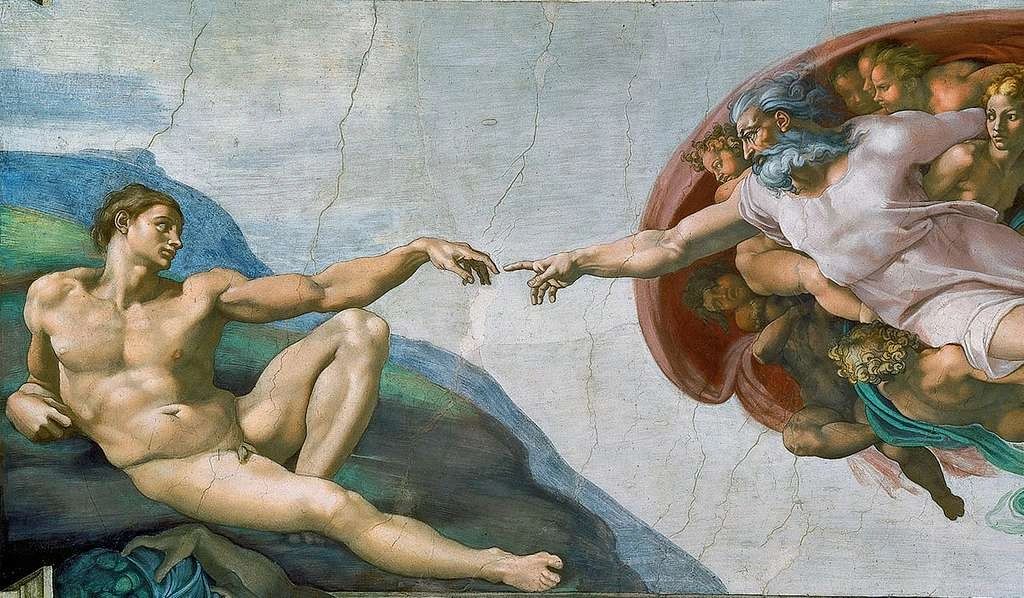
I intend to show that there is an alternative interpretation of the book of Revelation that has nothing to do with a worldly apocalypse. In fact, John’s prophetic dream maps out our journey from new believer to spiritual warrior. The imagery in Revelation, and its monsters, depict the terrain we travel through and the pitfalls that lie in our path.
Each of our journeys is unique. We all start in different places, but all of the roads we travel lead to the same shining city. Likewise, the time we spend on the path depends not so much on us, but on God. He is the conductor of our lives. At times He holds us back or skips us ahead, for His own purposes. He does not do these things out of malice. His love is parental in nature, and therefore difficult to understand without the proper perspective. We must view ourselves as children who are being taught how to behave. When we do that, His love for us becomes clear.
Sometimes the lessons we learn are for us, and at other times our neighbors benefit from the unique timing and events of our lives. At times, we are nothing more than cautionary tales, and we do not always see how our actions affect those around us. Nevertheless, every action serves a purpose.
Understanding Revelation and its symbolism can help us view the moments of our lives through the proper lens. But to see John’s book clearly, our perspective has to be correct. We must remember that what we get out of it depends on what we take into it. Our bias affects our results. If fear lives in our hearts, we will find only monsters. Clarity does not come from darkness, but from the light of understanding. Love is the key to unlocking the mysteries of Revelation. It is, after all, a love story.
Love encourages scrutiny. We call the object of our affection ‘the apple of our eye’ for a reason. It is the center of our focus and attention.
When we give something our attention, we naturally get something in return. We gain understanding of the thing we are focused on. We learn about it.
It is possible to gain understanding when we have fear in our hearts that drives our motives, but that fear skews our vision. Don’t get me wrong. Love skews it, too. To fully understand, we must recognize our biases and compensate for them. In the case of Revelation, many have tried to decipher it with fear and hate. They have not been successful. Only through the rose colored glasses of love does it become crystal clear. Only with God’s help can we overcome our bias and find the truth in its pages.
Revelation is a personal journey. It is a walk and talk with God. In its mysteries we find ourselves, and when we understand ourselves, we come closer to understanding God, because we are made in His image. He gave His Son to us. We are the Bride of Christ. This is our courtship.
Communication is key in any good relationship. Partners need to know what each other are thinking if their endeavors are going to be successful. For Christians, that communication with God comes in the form of prayer. We ask, and God answers, or doesn’t. It seems like much of the time silence is what He gives us. That silence can feel like abandonment, but it’s not. He already knows what is coming. He is working behind the scenes. He has engineered the answers to our questions; we just need to be patient and let His orchestrations play out. His silence exercises our faith.
Trust is an important part of any relationship. The couples that are most in tune with each other are the ones who rarely have to say a word. We are not there yet. We need to talk, but talking is for our benefit, not His. It allows us to better understand what it is that we want. Sometimes saying it is enough to make us realize that it isn’t as important as we thought it was.
When we search our souls, we gain understanding of ourselves and our motivations. When we drag our desires out into the light, while conversing with God, He will illuminate them and show them for what they truly are. He will help us understand why we want them, and help us see the truth behind them.
As I said, God’s love is parental in nature. Children are impatient. We don’t always realize how close the answers to our problems are. We are caught up in the moment, our eyes filled with possibilities, and our minds overcome by uncertainty. The danger can feel so imminent, and taking a breath seems like the last thing we need to do. But it is exactly what we should do.
First, we need to stop panicking and breathe. Second, we need to release that air as a question. Third, we need to keep breathing and walk away, trusting that God will give us what we need, when we need it.
The Walk and Talk
I have asked a lot of questions over the course of my life. Mostly because nothing in this world made sense to me. The rules were not intuitive. In fact, they were contrary to my own sense of how things should work. My confusion caused me to spend a lot of time wandering and wondering. Those two actions have defined my existence, but they have also brought me to the understanding I now have.
Before we get into Revelation, I think it’s important that I share the technique I used to arrive at the answers to my questions. I call it the walk and talk. Although I have been doing it my entire life, I really didn’t see it as a technique until I saw someone else do it too.
When my daughter was a toddler, learning to physically walk and talk, she would bring me toys, hold them up, and wait for me to tell her what they were. Then, once I had named them, she would toss them aside and go find a different one for me to identify. I realized by watching her that I was doing the same thing with God, only I wasn’t always patiently waiting for an answer, like she was.
That’s the key. Patience.
Remember that God knows what we want, even before we ask. Asking is for our benefit, so that we can clarify in our own minds exactly what it is that we’re after. Exercising our patience gives us the time to really think about what we’re after, and what we’re asking for.
Jesus gave us the Lord’s Prayer as an example of how to pray. If you’ll notice, nowhere in it does it mention anyone else, except where it urges us to forgive our debtors as we ask forgiveness for our debts. It’s all about us. That’s important for two reasons.
First, God also knows what our neighbors need. Second, the world has already been saved. Fixing these two things in our minds as absolutes can help us cut out a lot of unnecessary worry. When we put our neighbors and the world in God’s hands, we only have one question left: What do I want to see happen? When we phrase the question like that, and search out the answer within ourselves, we might surprise ourselves with the answer. And when we hold that answer up to the commandments that God has already given us, we might realize that it is our perspective that is off.
That doesn’t mean that we shouldn’t try to help others. It just means that we should go to God first, and let Him tell us how we can best help. Sometimes the best thing we can do is nothing at all. We won’t know that unless we’re holding up our problems and letting God sort them out.
When I have a question now, I hold it up in my mind, give it to God, then I go about my business until he sends me an answer. I don’t bother him with repetitive queries. I ask, then I let it go.
That doesn’t mean I leave it entirely up to Him. Part of the walk and talk is forward movement. That means doing my homework, exploring the thing that has me puzzled, or delving into something else that interests me. By doing this, I usually find the answer, but rarely where I expect it. I’ll point out some examples of this as we go along. For now, suffice it to say that those answers are typically not things I could have found on my own, no matter how much homework I did. And the way they arrive is usually just as interesting as the answers themselves.
Fire From Heaven
God loves to wrap His answers in epiphanies. In modern times, an epiphany is defined as a sudden revelation. But in the days following the death of Jesus, epiphany had a different definition. In those days, an epiphany was defined as the revelation of Christ to the Gentiles.
The epiphanies that I have come to know are like lightning strikes in my brain. They can be as terrifying as an approaching thunderstorm might be to a young child. But like the lightning in a thunderstorm, they are only the beginning. The answer that they bring is never complete until the thunder has rolled, the rain has fallen, and blue skies have replaced the dark clouds.
An epiphany brings a sudden awareness, or a change in perspective. It tells you that what you thought was true isn’t. But just as the world looks strange in the light of a lightning strike, so too does the new truth we are being shown. It takes our eyes time to adjust to our new awareness. We must exercise the patience of saints and let the storm pass to fully understand the change in our perspective.
This might sound corny, but Jesus reveals himself with lightning in our brains, because he is the Light. He is truth, and truth only comes with clarity. Clarity is not found where darkness and fog exist.
Just like in real life, sometimes we think a storm is coming, but it never arrives. If we’re waiting for an answer, but no epiphanies are lighting up our minds, it’s easy to get discouraged. We’re like farmers, waiting for rain, afraid that our crops will die if it doesn’t come quickly.
Take a breath.
Stop watching the sky.
When the time is right, the rain will come.
Maybe the answer you want isn’t meant for you.
Sharing is something most kids don’t do naturally. We have to be taught how to do it. Some epiphanies are meant for other children of God, not us. We have to learn to be happy with the ones we get.
The Bounty of Life
Life is not fair, no matter how much we want it to be. There’s a good reason behind that, but you probably won’t like it, and knowing it definitely doesn’t make life any easier. The simple truth is, God gives in abundance. In some things, He gives us fairness. In most things, He gives us unfairness. Both are gifts. Without the one, we wouldn’t know the other. We would not have a concept of fairness if we did not know what it was like to be treated unfairly.
Two things are better than one. Most of God’s gifts come with an upside and a downside. All of them help to move us where we need to go. The sooner we come to grips with that, the better.
The prophet Elias asked the Archangel Uriel why Time existed, and what the purpose of life was. Elias didn’t want to wait for answers from God. He wanted God to give him everything at once. Uriel told him that the world was not big enough for all of the people who needed to live in it. This simple answer explains a lot, once we understand it. To get to that understanding, we need to ask ourselves why Adam needed a helper. Then we need to take that question to God. That’s what I did, and I can save you some time if you’d like by sharing the epiphany that I got.
Adam needed a helper because he could not experience all of our lives and learn all of our lessons in a singular form. Many of those lessons come from group exercises. The purpose of life is for us to learn all the things we should and should not do, so that we can walk in the house of our Father without setting a foot wrong.
Time is necessary, because it dictates the order that our lessons come in. By separating Adam into a bunch of people who live short lives and have limited vision, God can give us one thing, then later give us its opposite. It’s like the adage says, you either die young, or live long enough to become the thing you hate.
Becoming the thing we hate is the best way to understand that thing. By doing so, we gain two gifts – the gift of not knowing, and the gift of knowing. And even if we die young, we have still served our purpose. Our untimely death will make others wonder at the unfairness of life. Some of them will turn to the thing they recognize as God and ask Him why it had to be so. Others will turn away and sink into their hate. Either way, we move closer to our destination. The sheep on the right-hand path, the goats on the left.
With Every Life Comes A Death
One question I hear people ask a lot is, why would God allow bad things to happen? Once we understand that those bad things are also gifts, the answer is clear. He gives in abundance. Knowing that doesn’t always make us feel better. In fact, like Elias, we might just want Him to get it over with in one fell swoop.
It’s hard to watch evil things happen, but it’s supposed to be hard. We’re not supposed to like it. Life is not always sweet, but that’s okay. The foods that nourish us the best aren’t the desserts.
God loves every life. What we fail to realize is that every one of our lives has a death attached to it. And just like our lives, each of those deaths is unique. None of us live the same, and none of us die the same. We might have shared experiences, but we don’t see them through the same eyes, or analyze them with the same mind. God loves every death just as much as He loves every life, because both are gifts that He crafted just for us. Our lives and our deaths are inching us ever closer to the moment of our marriage.
It is important that we, as a couple, communicate effectively and see each other clearly. To do that, we must understand our role in our relationship, as well as the role of our partner. We are the Bride; he is the Groom. Although Revelation is the story of our courtship and eventual marriage, it is just the beginning, because marriage is a beginning, not an end.
In order for you and me to take this trip through my interpretation of Revelation, we need to agree on some terms. You don’t have to agree with my definitions; you just need to accept that I am defining certain words in certain ways, based on my understanding. You can decide for yourself as we go along if I’m right or wrong.
The first word I’m going to define is Jew. Where Revelation is concerned, this word does not describe the Jewish people or the religion of Judaism. Like Epiphany, its definition lies much farther back.
Judah is one of the twelve tribes of Israel. They began as the twelve sons of Jacob. The blessing that Jacob gave each of his sons tells us a bit about who they were, and the traits they would pass down to their offspring.
Whether you wish to believe it or not, the entire world is being leavened with each of the twelve tribes. They were scattered for a reason. We all have some of the traits of Judah in us. For this reason, the word Jew in Revelation could refer to a person who is not what we consider to be Jewish.
I’ll get into Jacob’s blessings later, but for now just know that the Jews in Revelation are those people who adhere to the law and do not deviate from it easily. They hold on to traditions, even if they do not remember where they came from or why they were set into practice.
On a side note, it seems rather amazing that thirteen men (Ephraim and Manasseh are sometimes counted as one) could produce as many as three million souls in just 5 generations. That’s the estimated time from Jacob to the Exodus, and the high-end estimate of the number of people who left Egypt with Moses. The low-end is 40,000, which still seems like a lot. I suppose they took the commandment to go forth and multiply very seriously.
Or, there’s a more symbolic meaning to their story. We count generations as parent-to-child evolutions, but I believe the ancient scripture writers knew them as something else. It is my belief that the begats are more akin to the old Greek schools of thought. Such as those established by Socrates and Plato. Just because the teacher died, the school didn’t disappear. Many of those schools still live on today. Take Stoicism, for example. It still thrives because it is full of good ideas. However, if someone came along and taught a better way, then Stoicism would die, just like its founder. It would become a ‘dead’ philosophy, in the same way Latin is a ‘dead’ language – only spoken by scholars and priests. We wouldn’t forget Stoicism; its value for us would change.
As far as the begats are concerned, we have forgotten them, except their names. If we knew more about what those ancient Hebrew names meant, we might be able to decipher what they stood for, and consequently what they left to future generations. We might also know why they were replaced by the next name in the list of begats.
Scholars and priests won’t let go of Latin, because they still see value in it, even though the world has moved on from it. In this same way, scriptural Jews don’t let go of traditions, no matter how outdated they seem to be. I want you to know that this is not a bad thing. Someone has to hold on to the past, because the past gives us a reference point. With it, we can see how far we’ve come, and judge whether we went too far, or not far enough.
I want to reiterate that for our dive into Revelation, a Jew is anyone who holds on to traditions, even if they don’t understand the origin or meaning of them. That might be you.
The second term that needs defining is the word Greek. Throughout history, Greeks have been seekers of wisdom. Many schools of philosophy were born on that tiny string of islands. In Revelation, the Greeks are just that, seekers of wisdom. They are people who will change their position based on new information. They will gladly toss out the traditions of their ancestors if someone shows them a better way. This makes them distinct and somewhat opposite from Jews.
Third, we need to know the difference between being in the spirit and being in the body. The easiest way to differentiate between the two is to say that when we are in the spirit, everything feels right with the world. Perhaps you have had a peaceful moment like that? In that moment, we are perfectly in sync with God’s plan. That synchronicity allows us to see His hand moving in the world, and in our lives and the lives of others.
When we are in the body, we are blinded to everything but our own vanities. We cannot see God, only the world, and what we do see doesn’t seem to make much sense.
Our fourth point of agreement should be that people can die spiritually, as well as physically. In fact, we can die spiritually over and over again, during the same lifetime. Anytime we cease to be who we were and become someone new, we have died a spiritual death. Understanding this is vital to properly deciphering the scriptures.
When Seth was born, it is rumored that Eve said, “I see, now, that we are all vanity.” If you don’t understand what she meant, try to put yourself in her shoes. She had lost not one, but two sons when Cain killed Abel. One died a physical death, the other a spiritual one when he became a man who was capable of killing his own brother. Neither of the sons that Eve loved was in the world any longer. Abel was dead, and Cain was not the boy she had raised. It was vanity that caused the rift between Cain and his brother, and vanity that made Eve want the previous versions of her boys.
My thought is that Eve wanted to give birth to Seth in the hopes of bringing Abel back into the world. Remember, no one had died before Abel did, so his parents knew nothing of death.
In fact, when you see it from that innocent perspective, it changes the story of their crime in the Garden of Eden. When the serpent told them that they would not die if they ate of the fruit, he probably meant it because no such thing as death had ever been seen in the world. Only God knew what was coming. Therefore, the whole thing was probably a huge misunderstanding.
Sadly, Seth’s birth did not bring back Abel. Eve had to face the fact that, even though she had a new son, he was not the one she originally wanted. She had been blinded by her vanities.
Our next point of agreement concerns the vanities themselves. As I said, there are seven vanities built into all of us. Imagine them as potentiometers that move us the way a volume knob controls the sound from a speaker. A volume knob is, in fact, a potentiometer. It changes the potential (voltage) in a circuit.
Our vanities are made up of seven pairs. They are the seven deadly sins, tied to the seven saintly blessings. With them, God plays us the way a DJ at a nightclub manipulates his deck.
Once we understand them, we can turn the tables, so to speak, and use them to our advantage. Revelation will help us do that if we know how to read it properly.
Our next point of agreement is that the image of the Son of Man is something we should aspire to. He is symbolic of the uniform we should wear on our journey. We’ll delve into that symbolism in depth when we get to him. In doing so, we will find that he is not who we initially thought he was. In fact, none of the characters in Revelation live up to the hype we have built around them. We’ll pick each one apart as we go. I think you’ll be surprised at their true faces. I know I was.
Finally, we need to know the difference between the spirit of the law and the letter of it, and we need to know that love is the key to everything.
God loves us. It doesn’t always seem that way, because His love is parental in nature. As children, we don’t always see the purpose behind the rules. They feel oppressive until we grow up and realize that not only are they in our best interest, but they are flexible as well.
When we were toddlers, our parents set an early bedtime for us because that is what toddlers need. As we grew up, that bedtime changed. Now, as adults, we decide for ourselves just how much sleep we need, and when we should get it.
It is in this vein that Jesus told us that the Son of Man is the master of the Sabbath. As children of God, we are growing up, and thus we are able to decide for ourselves when and how to apply the rules. When we do that, they become less restrictive and more like really good ideas.
It’s like Paul said, everything is permissible, but not everything is edifying. As adults, we can do whatever we wish. We have no curfew. If we want to eat ice cream for breakfast, we can, and we can work seven days a week, three hundred and sixty-five days a year without a day off. But should we? The answer is, only if we want to work our way into an early grave.
Applying the rules at the right time can be beneficial, but in the same respect, we can get into trouble by applying them at the wrong time. For instance, none of us would force our toddler to take a nap if our house was on fire. I know that’s an extreme example, but you get the point. There are times when the laws should be upheld, and times when they shouldn’t be. The problem is, it’s not always easy to tell which moment is which.
If you can drive, you have probably encountered a timed stoplight that took far too long to change to green. This happens a lot in business parks where traffic is heavy on the main road during the day, but not so heavy at night when all the businesses are closed. If we’re entering the main road from a side road, and we get stuck at such a light, we might be inclined to just break the law and run it. We’re adults after all, and we can see that the road is clear, and we know that the stoplight is on a timer, but we also know that none of that will matter to the police officer who sees us and pulls us over. This example demonstrates the difference between the spirit of the law and the letter of it.
The spirit of the law says that the stoplight is there to ensure that everyone gets their fair chance to turn. It’s designed to help traffic flow smoothly and to cut down on accidents.
The letter of the law says that we have to sit at the light until it turns green. If we go while it is red, we risk being ticketed.
As toddlers, we were forced to follow the letter of the law because we were too young to understand the spirit of it. We didn’t care that it was bedtime or that we were tired and cranky; we wanted to stay up.
As adults, we understand that when we get tired, we should rest, because our body is telling us that we need it.
So the question is, do we run the light or sit and wait for it to change? If we believe that we are adult enough to make our own decisions, and observant enough to cross the intersection without getting into an accident, and we’re willing to take the risk, then maybe we chance it and hope there are no police around. But if our concern is centered on keeping our driving record clean, then we sit and wait. Either way, the decision and the potential consequences are ours.
And let’s be clear: rules do not stop bad behavior. Murder has been against the law in nearly every society throughout human history. Regardless, someone is murdered every day. In truth, the only laws that really matter are the ones that we apply to ourselves. It is only our own determination to not commit murder that keeps us from doing it. If we really wanted to do it, then none of the potential consequences would matter.
But what if we don’t understand the rules? What if we break them by accident? What if we’ve never even heard of them? Is someone who has never read the Ten Commandments still obligated to follow them? This question has plagued theologians for centuries. Here in America, ignorance of the law is no excuse for not following it. As citizens, we are expected to know what is expected of us and behave accordingly. The problem is, the laws keep changing.
Where biblical law is concerned, we have to ask ourselves what kind of God would enforce punishments on people who were never warned of their transgressions. I’m not simply talking about non-Christians. What if the sect of Christianity I was raised in gets it wrong? Is that my fault? I mean, I tried. Didn’t I? Isn’t that worth something?
Judaism is the basis for all of Christianity. However, most Christians don’t follow Judaic laws, other than the Ten Commandments and a few select regulations that appeal to the type of world they want to live in. Even most Jews can’t live up to the expectations of their laws.
Then there was that pesky Babylonian captivity, where the Jews weren’t allowed to talk about their religion or write it down or read from its scriptures, for five hundred years. It’s obvious from the stories they passed down to us that they had some trouble piecing things back together once the Babylonians set them free. Is it possible they got some things wrong? Absolutely.
Even before their captivity, the twelve tribes found it difficult to agree on what certain things meant. Their confusion caused rifts between them, with each of the various sides accusing the others of heresy. Can we say for sure that the Jews were right, just because the other tribes were overthrown and lost? Perhaps, but even Jesus alluded to the fact that the interpretations of the Jews of his time were wrong when he said that he did not come to abolish the law, but to fulfill it. The word ‘fulfill’ implies that something is missing. That missing thing is love that comes from understanding. The law was made for the people, not the people for the law, and without love the law is merciless oppression.
That being said, why would God allow the Jews to get things wrong? Why would He let their understanding become muddied over five hundred years? The short answer is, because He gives in abundance. If we get the misunderstanding and then the understanding, we have two gifts, not just one.
This idea of bad things being gifts is a hard pill to swallow, but one that we must take if we want to get to the end of our journey.
The book of Revelation has been a mystery since the day it was written, because God gives in abundance. Confusion is one of His creations, and He loves all of His creations.
I am not going to assert that my interpretation is the only possible one, because God is capable of anything. I will only say that the key to unlocking the Patmos finger-trap is love.
Without love, Revelation is full of scary monsters and world-ending cataclysms. With love, it is the story of our journey to be closer to God.
Some other terms need to be defined in order for us to start on the same ground. In fact, we can start with ground, or dirt. For this book, dirt is truth - though not solid truth. It is somewhat provable, but still not definite. It’s like a scientific law. We can use it to understand other things, so long as we remember that even the laws of science undergo the occasional revision.
Stone is more solid than dirt, and therefore represents hard facts that are obvious and indisputable. An example of this might be that rain falls down from the sky. Everyone knows it, and to date, rain has never let us down.
On the subject of rain, water is our next symbol. It is not solid like stone. Standing on it is not recommended unless you’re Jesus, who walked on it. Because it is so fluid, water represents belief. It encompasses philosophies, hunches, and educated guesses.
When the Bible tells us that Jesus walked on water, we can interpret that to mean that he operated on faith or belief. Like us, there was a time when he wasn’t sure. When one of his disciples tried to stand on that belief, he sank into it. Can you imagine a time when someone came to you with an idea, but you just couldn’t buy into it, no matter how much you wanted to?
Stone and water also represent male and female. Nothing corrals water like stone, and nothing smooths stone like water. I’m sure you can see the resemblance to men and women. Let’s be precise, though. Each of us has some male and female inside us. The Israelites knew this. When they were preparing to go into Canaan, they were warned that men should not lie down with men.
Notice, there is no prohibition in the Bible about women lying with women. Many people interpret this commandment as a prohibition against homosexuality. I think they are wrong.
The Israelites were going to encounter many strange people. They would need to deal with these people. In fact, I assert that they were going into the promised land to convert the inhabitants, not physically kill them. It was a spiritual sword and death that they were bringing.
To do this effectively, they needed to communicate effectively. In those days, people didn’t sit in chairs. They reclined on carpets, on the ground. Knowing this, we can interpret the prohibition in this way: If one or more of the Canaanites were stubborn, hard-headed males, it would be unwise to place a similarly stubborn, hard-headed male next to them. The best course of action would be to put a female beside them, who could smooth them over.
This does not necessarily mean a woman. It could mean a man with a more feminine approach. I think that we forget that our ancestors were aware that each of us has both male and female inside us, even though Israelite mythology claims Adam had two faces, one male and one female. They knew that some men were more effeminate, and that some were more soft-spoken and maternal. Keeping that in mind would have been very handy in engineering relationships between themselves and the Canaanites.
There is no prohibition against women lying with women, because when water meets water it does not crack like two stones do when they meet. It only makes more water.
Water absorbs or hides things that are put into it. Our feminine sides do the same. If you leave a stone under moving water, it will lose all of its rough edges.
We could also look at this prohibition in the light that stone is truth, and water is belief. Through this lens, we can see that it is not wise to bash your neighbor’s truth with your own. Instead, smooth out their truth with belief or philosophy. This works particularly well for things people believe to be true, but you know to be false.
Wheat is a grass. In the scriptures, it represents gifts the earth gives us that are not always pleasant in the mouth, yet they nourish the body better than fruits.
Grass is boring. That’s why we compare boredom to watching grass grow, and monotony to counting blades of grass. Fruits are more fun. Most people think bread is better when it has some fruit in it. Holiday fruitcakes notwithstanding.
Fruits taste good, but aren’t as nutritious as grains. Like grains, they are gifts from the world. This means that we do not connect them to anything spiritual. An example of this might be the knowledge that if we work hard, we will gain, as in when we till our fields and plant our seeds, we will have food to eat through the winter. It was this discovery that allowed nomadic people to stop their roaming. It is something they learned from the world, without any seeming help from a deity.
The major difference between wheat and fruit is that we have to work for one, while the other is free to be picked with little effort or cost.
When we grind wheat, we get flour, which can be mixed with water to create dough. When we bake dough, we get bread, which symbolizes the things we make when we mix monotonous work with philosophy, such as when we say that idle hands are the devil’s workshop. This phrase was used to remind people that being idle would lead them to seek trouble, and that they should therefore stay busy.
The Israelites were told to make unleavened bread, which would be perfect for a people on the go because it takes less time to bake. Yeast has to rest before it goes into the oven. The Israelites had no time to rest while crossing the desert. Unleavened bread doesn’t rise, which is symbolic of us when we don’t become full of ourselves because of the work that we do.
Jesus told us that bread was symbolic of his body. In other words, the bread we eat should remind us of the things he did and what he made with the gifts he was given. He was a great orator, but he was also reluctant to embrace his destiny. If we read through the stories of his actions, we can see that he was learning as he went along, just like us. More on that later.
Wine, unlike bread, is made by letting fruit rot or ferment. Wine makes us drunk, which is an altered state of consciousness where our inhibitions are loosened. It can also make us sick to our stomach. We make wine when the fruits of life make our heads spin, or cause us to do things we wouldn’t normally do and leave us with a terrible hangover the next day.
Symbolically speaking, when our plans don’t come to fruition, we make wine. Jesus told us to drink wine to remember him. By doing so, he was telling us to look at what he wanted to be, not just what he was. He had a life in mind that he put aside to follow God’s plan.
He was also a winebibber, which is another way of saying a drunkard. He was an alcoholic who learned to deal with his disease. I’m sure that part of him would have preferred to keep on drinking, instead of dying on the cross. Maybe the other life he wanted was nothing more than that, the life of a drunkard?
When our physical and spiritual natures clash, we are making wine.
Meat is not so much made as grown. We train our muscles and build our bodies by ingesting worldly things. Bread and wine both require a recipe, and we can follow that recipe, but the recipe that grows muscle wasn’t really known to the people of John’s time. Therefore, meat represents the things that God placed in us, like our strengths and weaknesses. Some of them can be overcome, while others must simply be lived with.
When Jesus returned from the dead, he was hungry, and they gave him fish to eat. We think of fish as a type of meat, and in fact it is flesh, but there is a difference between the two terms, scripturally. Meat is on land (truth), while fish live in the sea (belief). Therefore, meat symbolizes what we know our strengths and weaknesses to be, while fish represent what we believe them to be, but can’t prove decisively.
Jesus was given fish, which means the people he met nourished him with their beliefs about who he was. Likewise, the symbol the early Christians adopted was a fish. Bearing it didn’t tell people who you were; it told them who you were aspiring to be. As we can see in the story of Jonah, fish also represent things that are moving below the surface. They are mysterious forces that seem to exist, but can’t be proved until we pull them up onto the land.
When Jesus told his followers to be fishers of men, he meant that they should drag people from belief (water) into truth (land). In other words, they might believe that there is a power (God) in the world, but not what its name is, or what it looks like.
To discover the truth about a thing, we must drag it from darkness into the light. Fire is light that we can make. The sun is light from above. The moon is a false light that only reflects the rays of the sun. Light of any kind represents scrutiny. It can be ours, or God’s, depending on the symbol used.
False lights still expose things that are hidden in the dark. They are symbolic of lights from heaven that we don’t associate with being from God. For instance, when Jesus was told that a sorcerer was using his name, he wasn’t worried. He said, “Whoever is not against us is for us.” He knew that the light that person was spreading, although akin to moonlight, was still reflecting the truth. No one who saw him perform miracles would doubt that Jesus had even more power, because it was his name being invoked. And for those of you who might be concerned about others stealing what belongs to you, remember that no one can recall the name of that sorcerer. Jesus, however, is known to most of the world.
Note that bread is baked using heat, either from the sun or an oven. Heat is a form of scrutiny, symbolically speaking, except that it doesn’t merely shine a light on something; it puts pressure on that thing and changes it. Heat can make us comfortable or uncomfortable, depending on external conditions. It can make us move or put us to sleep. Change does not require a light to be shone on us. Our own bodies give off heat, but the light they produce is not in our visual range.
Sometimes the heat we feel is only in our minds, because there is a fire in us that is bringing about a change. We might call that fire “regret”.
Wine also needs heat. Fermentation is an exothermic process. It creates heat as microorganisms consume sugar, turning it into alcohol and other things. It’s important to note that sugar is sweet on our tongues, while wine is sour. This tells us much about what happens when we make spiritual wine. We examine the things in life that seem nice, but end up giving us a reason to whine.
Also, a large amount of sugar gives us a rush of energy, while large quantities of alcohol make us want to sleep.
As I said, these are nothing more than points of agreement between us. You don’t have to believe some of my assumptions. All I ask is that you wait until the end to pass judgment. We will look at these terms and how they apply to each verse more in-depth, as we go along.
This is only the beginning of your walk and talk. If my words inspire you to question, know that the answers to those questions are within your reach. You just have to do a little digging, but it’s important to always ask before you dig.
I urge you to take the things I say to God, and let Him sort them out for you. Do not trust my understanding, or the understanding of any other mortal. After all, maybe the next big leap in human understanding is lying somewhere in your head, just waiting for you to uncover it.
What I will ask of you is patience. As you will see, our journey through Revelation brings on many changes in perspective, just as our perspective changes from the outset of a storm through to its conclusion. What seems right at one moment changes with new epiphanies. For that reason, I would ask that you hold your final judgment until the end. See it through. You might not agree with something in the beginning, but the end might make it crystal clear. Then again, you may find the treasure that has eluded me.
This is going to be a line-by-line examination of the verses in Revelation. To understand them, we will need to bring in other bible verses and information from sources outside the Scriptures. Some of it will probably be foreign to you. I may not take the time to do a deep dive into all of it. If something puzzles you, God and Google are your best friends. You’ll be amazed at what they can teach you.
Part of the revelation process is having the ground under our feet shaken. If you don’t want to have your world upended, if you like Revelation as a scary apocalyptic book, then turn away from here and go back to what you were doing.
If you decide to keep reading, know that salt symbolizes skepticism that is gained through (often unpleasant) worldly experiences. We become salty when we have seen too much. Our saltiness gives us a higher level of scrutiny when it comes to new people or ideas. A small amount flavors our life. Too much sours our outlook. It dries up our fantasies and leaves us on rocky ground. For some of the assertions in this book, you’re going to need more than a grain of it.