Our Purpose
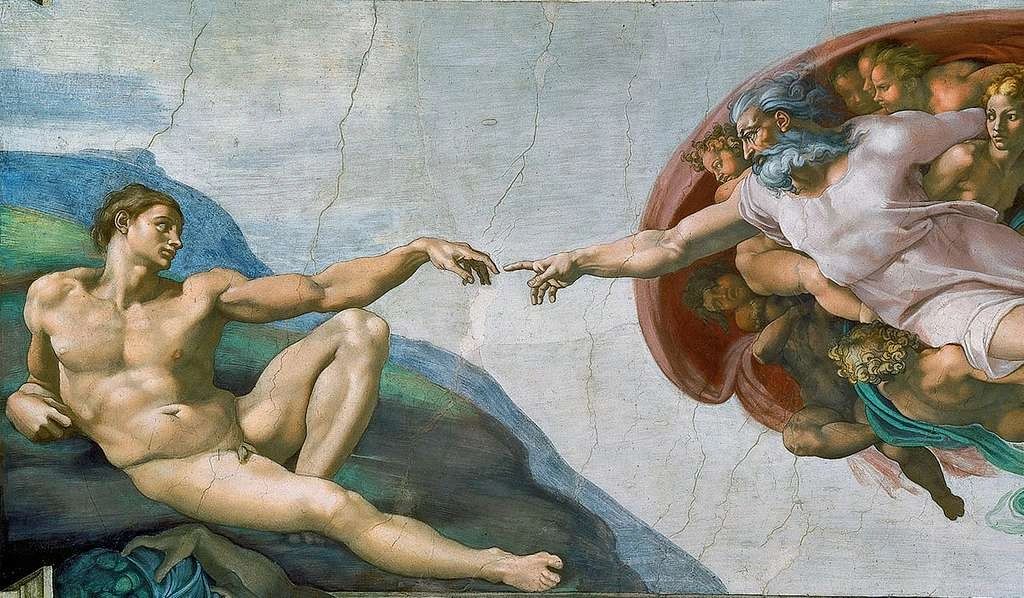
Why do the scriptures seem to contradict each other? Why does one say,"An eye for an eye", while the other says, "Forgive"? Why does the book of Revelation feel like an apocalyptic prophecy, and yet in many places it makes no sense at all? These are the mysteries we are going to unravel using symbolism that has been in front of our faces this entire time. When we are finished, we will all wonder how anyone missed these simple explanations that tie all of the scriptures together in a way no one has dreamed of, until now.
Revelation is a journey. The words are ancient, but the understanding of them is intended for modern audiences, using today's language and definitions. Join author Tom Long as he steps through verse after verse, shining a new light on some of the world's oldest mysteries.
Off on the Right Foot
I intend to show that there is an alternative interpretation of the book of Revelation that has nothing to do with a worldly apocalypse. In fact, John’s prophetic dream maps out our journey from new believer to spiritual warrior. The imagery in Revelation, and its monsters, depict the terrain we travel through, and the pitfalls that lie in our path.
Each of our journeys is unique. We all start in different places, but all of the roads we travel lead to the same shining city. Likewise, the time we spend on the path depends, not so much on us, but on God. He is the conductor of our lives. At times He holds us back, or skips us ahead, for His own purposes. He does not do these things out of malice. His love is parental in nature, and therefore difficult to understand without the proper perspective. We must view ourselves as children, who are being taught how to behave. When we do that, His love for us becomes clear.
Sometimes the lessons we learn are for us, and at other times our neighbors benefit from the unique timing and events of our lives. At times, we are nothing more than cautionary tales, and we do not always see how the things we do affect those around us. Never the less, every action serves a purpose.
Understanding Revelation and its symbolism can help us view the moments of our lives through the proper lens. But to see John’s book clearly, our perspective has to be correct. We must remember that what we get out of it depends on what we take in to it. Our bias affects our results. If there is fear in our hearts, we will find only monsters. Clarity does not come from darkness, but from the light of understanding, and understanding only comes from one source. The key to unlocking the mysteries of Revelation is love. It is, after all, a love story.
Love encourages scrutiny. We call the object of our affection ‘the apple of our eye’ for a reason. It is the center of our focus and attention.
When we give something our attention, we naturally get something in return. We gain understanding of the thing we are focused on. We learn about it.
It is possible to gain understanding when we have fear in our hearts, driving our motives, but that fear skews our vision. Love skews it, too. In order to fully understand, we must recognize our bias and compensate for it. In the case of Revelation, many have tried to decipher it with fear and hate. They have not been successful. Only through the rose colored glasses of love does it become crystal clear. Only with God’s help can we overcome our bias and find the truth in its pages.
Revelation is a personal journey. It is a walk and talk with God. In its mysteries we find ourselves, and when we understand ourselves, we come closer to understanding God, because we are made in His image. He gave His son to us. We are the Bride of Christ. This is our courtship.
The Walk and Talk
Communication is key in any good relationship. Partners need to know what each other are thinking, if their endeavors are going to be successful. For Christians, that communication with God comes in the form of prayer. We ask, and God answers, or doesn’t. It seems like much of the time, silence is what He gives us. That silence can feel like abandonment, but it’s not. He already knows what is coming. He is working behind the scenes. He has engineered the answers to our questions, we just need to be patient and let them play out. His silence exercises our faith.
Trust is an important part of any relationship. The couples that are most in tune with each other, are the ones who rarely have to say a word. We are not there, yet. We need to talk, but talking is for our benefit, not His. It allows us to better understand what it is that we want. Sometimes saying it is enough to make us realize that it isn’t as important as we thought it was.
When we search our souls, we gain understanding of ourselves and our motivations. When we drag our desires out into the light, while conversing with God, He will illuminate them, and show them for what they truly are. He will help us understand why we want them, and help us see the truth behind our desires.
As I said, God’s love is parental in nature. Children are impatient. We don’t always realize how close the answers to our problems are. We are caught up in the moment, our eyes filled up with possibilities, and our minds overcome by uncertainty. The danger feels so imminent, and taking a breath seems like the last thing we need to do. But it is exactly what we should do.
First, we need to stop panicking, and breathe. Second, we need to release that air as a question. Third, we need to keep breathing, and walk away, trusting that God will give us what we need, when we need it.
I have asked a lot of questions, over the course of my life. Mostly because nothing in this world made sense to me. The rules were not intuitive. In fact, they were contrary to my own sense of how things should work. My confusion caused me to spend a lot of time wondering, and wandering. Those two actions have defined my existence, but they have also brought me to the understanding I now have.
Before we get into Revelation, I think it’s important that I share the technique I used to arrive at the answers to my questions. I call it the walk and talk. Although I have been doing it my entire life, I really didn’t see it as a technique, until I saw someone else do it, too.
When my daughter was a toddler, learning to walk and talk, she would bring me toys, hold them up, and wait for me to tell her what they were. Then, once I had named them, she would toss them aside and go find a different one for me to identify. I realized by watching her, that I was doing the same thing with God, only I wasn’t always patiently waiting for an answer, like she was.
That’s the key. Patience.
Remember that God knows what we want, even before we ask. Asking is for our benefit, so that we can clarify in our own minds, exactly what it is that we’re after. Jesus gave us the Lord’s Prayer as an example of how to pray. If you’ll notice, nowhere in it does it mention anyone else, except where it urges us to forgive our debtors, as we ask forgiveness for our debts. It’s all about us. That’s important for two reasons.
First, God also knows what our neighbors need. Second, the world has already been saved.
That doesn’t mean that we shouldn’t try to help others. It just means that we should go to God first, and let Him tell us how we can best help. Sometimes the best thing we can do is nothing at all. We won’t know that, unless we’re holding up our problems, and letting God sort them out.
When I have a question now, I hold it up in my mind, give it to God, then I go about my business until he sends me an answer. I don’t bother him with repetitive queries. I ask, then I let it go.
That doesn’t mean I leave it entirely up to Him. Part of the walk and talk is forward movement. That means doing my homework, exploring the thing that has me puzzled, or delving into something else that interests me. By doing this, I usually find the answer, but almost never where I expect it. I’ll point out some examples of this, as we go along. For now, suffice it to say that those answers are typically not things I could have found on my own, no matter how much homework I did. And the way they arrive is usually just as interesting as the answers, themselves.
Fire from Heaven
God loves to wrap His answers in epiphanies. In modern times, an epiphany is defined as a sudden revelation. But in the days following the death of Jesus, they had a different definition. In those days, an epiphany was defined as the revelation of Christ to the Gentiles.
The epiphanies that I have come to know are like lightning strikes in my brain. They can be as terrifying as an approaching thunder storm might be to a young child. But like the lightning in a thunder storm, they are only the beginning. The answer that they bring is never complete until the thunder has rolled, the rain has fallen, and blue skies have replaced the dark clouds.
An epiphany brings a sudden awareness, or a change in perspective. It tells you that what you thought was true, isn’t. But just as the world looks strange in the light of a lightning strike, so too does the new truth we are being shown. It takes our eyes time to adjust to our new awareness. We must exercise the patience of saints, and let the storm pass, in order to fully understand the change in our perspective.
This might sound corny, but Jesus reveals himself with lightning in our brains, because he is the Light. He is truth, and truth only comes with clarity. Clarity is not found where darkness and fog exist.
Just like in real life, sometimes we think a storm is coming, but it never arrives. If we’re waiting for an answer, but no epiphanies are lighting up our minds, it’s easy to get discouraged. We’re like farmers, waiting for rain, afraid that our crops will die if it doesn’t come quickly.
Take a breath.
Stop watching the sky.
When the time is right, the rain will come.
Maybe the answer you want isn’t meant for you.
Sharing is something most kids don’t do naturally. We have to be taught how to do it. The same goes for epiphanies. Some of them are meant for other children of God, not us. We have to learn to be happy with the ones we get.
The Bounty of Life
Life is not fair, no matter how much we want it to be. There’s a good reason behind that, but you probably won’t like it, and knowing it definitely doesn’t make life any easier. The simple truth is, God gives in abundance. In some things, He gives us fairness. In most things, He gives us unfairness. Both are gifts. Without the one, we wouldn’t know the other. We would not have a concept of fairness, if we did not know what it was like to be treated unfairly.
Two things are better than one. Most of God’s gifts come with an upside, and a downside. All of them help to move us where we need to go. The sooner we come to grips with that, the better.
The prophet Elias asked the Archangel Uriel why Time existed, and what the purpose of life was. Elias didn’t want to wait for answers from God. He wanted God to give him everything, at once. Uriel told him that the world was not big enough for all of the people who needed to live in it. This simple answer explains a lot, once we understand it. To get to that understanding, we need to ask ourselves why Adam needed a helper. Then we need to take that question to God. That’s what I did, and I can save you some time, if you’d like, by sharing the epiphany that I got.
Adam needed a helper, because he could not experience all of our lives, and learn all of our lessons in a singular form. Many of those lessons come from group exercises. The purpose of life is for us to learn all the things we should, and should not do, so that we can walk in the house of our Father without setting a foot wrong. Time is necessary, because it dictates the order that our lessons come in. By separating Adam into a bunch of people who live short lives, and have limited vision, God is able to give us one thing, then later give us its opposite. It’s like the old adage says, you either die young, or live long enough to become the thing you hate. However, even if you die young, you have still served your purpose.
With every life, comes a death
One question I hear non-Christians ask a lot is, why would God allow bad things to happen. Once we understand that those bad things are also gifts, the answer is clear. He gives in abundance. Knowing that doesn’t always make us feel better. In fact, like Elias, we might just want Him to get it over with in one fell swoop.
It’s hard to watch evil things happen, but it’s supposed to be hard. We’re not supposed to like it. Life is not always sweet, but that’s okay. The foods that nourish us the best, aren’t the desserts.
God loves every life. What we fail to realize is, every one of our lives has a death attached to it. And just like our lives, each of those deaths is unique. None of us live the same, and none of us die exactly the same. We might have shared experiences, but we don’t see them through the same eyes, or analyze them with the same mind. God loves every death, just as much as He loves every life, because both are gifts that He crafted just for us. Our lives and our deaths are inching us ever closer to the moment of our marriage.
It is important that we, as a couple, communicate effectively and see each other clearly. To do that, we must understand our role in our relationship, as well as the role of our partner. We are the Bride, he is the Groom. Although Revelation is the story of our courtship and eventual marriage, it is just the beginning, because marriage is a beginning, not an end.
In order for you and I to take this trip through my interpretation of Revelation, we need to agree on some terms. You don’t have to agree with my definitions, you just need to accept that I am defining certain words in certain ways, based on my understanding. You can decide for yourself, as we go along, if I’m right or wrong, because this site, like marriage, is only a beginning in your own walk and talk. If it inspires you to question, know that the answers to those questions are within your reach. You just have to do a little digging, but it’s important to always ask before you dig.
I urge you to take the things I say to God, and let Him sort them out for you. Do not trust my understanding, or the understanding of any other mortal. After all, maybe the next big leap in human understanding is lying somewhere in your head, just waiting for you to uncover it.
What I will ask of you is patience. As you will see, our journey through Revelation brings on many changes in perspective, just as our perspective changes from the outset of a storm, through to its conclusion. What seems right at one moment, changes with new epiphanies. For that reason, I would ask that you hold your final judgment until the end. See it through. You might not agree with something in the beginning, but the end might make it crystal clear.
This is going to be a line by line examination of the verses in Revelation. In order to understand them, we will need to bring in other bible verses, and information from sources outside the scriptures. Some of it will probably be foreign to you. If something puzzles you, God and Google are your best friends. You’ll be amazed at what they can teach you.
Part of the revelation process is having the ground under our feet, shaken. If you don’t want to have your world upended, if you like Revelation as a scary, apocalyptic book, then click the x in the corner of this website and go back to what you were doing.
If you decide to keep reading, know that salt symbolizes skepticism that is gained through (often unpleasant) worldly experiences. We become salty when we have seen too much. Our saltiness gives us a higher level of scrutiny when it comes to new people or ideas. A small amount flavors our life. Too much sours our outlook. For some of my assertions, you’re going to need more than just a grain of it.