A Mother’s Love
Like the first woe, the second woe is more of a woah. It stops us in our tracks and makes us think. We are reminded that all of the people we know are affected in some way by our journey. It was no different for Jesus.
The Seventh Trumpet
15 The seventh angel sounded his trumpet, and there were loud voices in heaven, which said: “The kingdom of the world has become the kingdom of our Lord and of his Messiah, and he will reign for ever and ever.”
Once you see it, it can’t be unseen or denied. The seventh trumpet ushers in a truth that can’t be shaken.
16 And the twenty-four elders, who were seated on their thrones before God, fell on their faces and worshiped God, 17 saying: “We give thanks to you, Lord God Almighty, the One who is and who was, because you have taken your great power and have begun to reign.
There are a couple of things we need to remember here. The throne is in our heart. We are one with God; therefore, we are God. We can see that clearly now. The elders are those who walked this road before us, who paved the way for us, and even though Jesus sits on our throne, he is not alone. We have begun to take control of our own lives, using the knowledge we have gained.
18 The nations were angry, and your wrath has come. The time has come for judging the dead, and for rewarding your servants the prophets and your people who revere your name, both great and small— and for destroying those who destroy the earth.”
I know that this verse reads like a terrible judgment day, where we are the ones being judged, but that’s not the case. We are judging all of the things that got us to this place, whether it’s our past life (the dead), or our servants (our angels and devils, and the people whose words led us to this understanding), and those who love us and hate us (Those who revere our name, and those who would destroy our world).
Remember that the nations are represented by the four Seraphim that sit before the throne. They represent all the roles that we might find ourselves in, and they give us insight into how we can best fill those roles. They are Monarchy, Theocracy, Democracy, and Anarchy. They were angry because they could not fly, but our wrath is past. We are sick and tired of being sick and tired, so we are taking the reins into our own hands.
19 Then God’s temple in heaven was opened, and within his temple was seen the ark of his covenant. And there came flashes of lightning, rumblings, peals of thunder, an earthquake and a severe hailstorm.
We mustn’t allow words to intimidate us. We know now that epiphanies arrive on lightning bolts, and that the initial idea or concept that comes takes time to become clear. Until it does, we must suffer some thunder, and it can be scary, but only because change scares us.
When the ground under our feet moves, we can be thrown off balance, but the path of revelation is a shaky one that requires us to trust the process and the God controlling it.
Hail is frozen water that falls from the sky. Think about what that means, in the context of what we have learned so far. Water is philosophy. Rain is water that falls from heaven, instead of bubbling out of the earth. When our philosophy becomes frozen, it can feel like we are being pelted with ice. We are being stoned with undeniable beliefs.
Imagine what hail was like for people who didn’t have our modern understanding of weather systems. Ice falling from the sky? How weird.
Now imagine being a person who lives in a desert and has never seen ice, much less hail. If someone tried to describe it to you, would you believe them?
The resurrection of Jesus has been called a foolish miracle. That’s because it takes an incredible leap of faith to believe in it. As we will see, leaps of faith are not normal behavior for beasts who never look up.
The Woman and the Dragon
12 A great sign appeared in heaven: a woman clothed with the sun, with the moon under her feet and a crown of twelve stars on her head.
The identity of this woman is easy to uncover once we understand the hints we have been given. She is wrapped in light, the sun, which was the brightest light the Old Testament world knew. She is Jewish. The moon is under her feet. She walks on reflected light, which means she is privy to a truth no one else knows. That light comes from a heavenly body, the moon.
She wears a crown, which makes her royalty, but that crown has twelve stars in it. The number twelve is symbolic of the tribes of Israel. She is a Jewish princess, or queen, and the hope of Israel is in her.
2 She was pregnant and cried out in pain as she was about to give birth.
Israel’s hope is literally in her, because she carries the child who will save them all. Can you guess her name? If you said Mary, you are correct. The reason she is in pain is that she is confused by what her child might become. She was told that he would be a great man. The angels reassure her, but even with angels whispering in our ears, we can still find doubt.
3 Then another sign appeared in heaven: an enormous red dragon with seven heads and ten horns and seven crowns on its heads.
The fear in us whispers that this is the Devil, but Revelation can’t be deciphered correctly using fear as the key. We have to use love, in this case, a mother’s love. Mary is wrapped in the sun, which is a false light. She is not seeing her son from the proper perspective. The dragon that appears is all in her head. She is fantasizing about what Jesus (Her unborn child) might become.
Remember back in verse 5, when the Lamb was being described? Recall that it had seven horns and seven eyes, and that they represented the seven spirits of God that were sent out into all the world? This dragon has seven heads, and seven crowns. Seven is a holy number. An evil dragon would not dare wear seven of anything, nor would he have a holy number of heads. We know, however, that there are seven vanities, and that Jesus would learn to master them over the course of his life. Therefore, we can deduce that this dragon is Jesus, without a doubt.
He is red because red symbolizes fiery passion, or it can represent shame. Both of those words, passion and shame, describe the life Jesus lived and how he died. The dragon is enormous because Mary knows that her son will be larger than life. He is a dragon because dragons are mythical creatures. Like them, Mary’s fearful image of what her son might be is a fantasy.
4 Its tail swept a third of the stars out of the sky and flung them to the earth. The dragon stood in front of the woman who was about to give birth, so that it might devour her child the moment he was born.
Falling stars symbolize great people, or important messages being brought down to earth. When our heroes become human, they lose some of their light and no longer stand above us. During his life, Jesus brought many great men to their knees (Such as Paul). He also challenged many of the traditions that the Jews were holding on to. Even as a small child, he said things that made his mother wonder who he was. The scriptures tell us she held those things in her heart.
The fantasy of what her unborn son might become threatened to devour Mary. Imagine being the mother of Adolph Hitler, and having foreknowledge of what he would do when he got older. The fear of the future might threaten your present, and the love you have for the child in your belly.
5 She gave birth to a son, a male child, who “will rule all the nations with an iron scepter.” And her child was snatched up to God and to his throne.
Mary didn’t let her fear force her to do anything drastic. One look in her child’s eyes made her forget her fantasy, for a while. We know that the child is Jesus, because he rules the nations, which are the vanities. A scepter is the symbol of a monarch. The fact that it’s iron implies that his will is unbending. He is snatched up to God, and his throne, because Mary puts him where he belongs, in God’s hands.
6 The woman fled into the wilderness to a place prepared for her by God, where she might be taken care of for 1,260 days.
Mary also found a safe place from her nightmare. The wilderness is where we go to get away from the voices of people. In nature, we can hear the voice of God and see His hand in everything. This is a story about Mary learning to trust, but trust is a brittle thing, easily broken.
The timeline here is about three and a half years, which means Mary was safe until Jesus learned to walk and talk. Then her fear raised its ugly head once again.
7 Then war broke out in heaven. Michael and his angels fought against the dragon, and the dragon and his angels fought back. 8 But he was not strong enough, and they lost their place in heaven.
In this case, heaven is inside Mary, just as it is inside us. Her peace was disturbed by the conflicting messages she was receiving. Michael represents comforting messages from God. His name means “Who is like God?” That’s important, since Mary is looking at a child who is supposed to be the Son of God, but he’s just a kid.
Ask any parent, and they will tell you that once you diaper someone’s butt, you will find it hard to put stock in anything they say. Mary was afraid she was raising a little hellion. Fortunately, Michael and his comforting words won the day, and Mary’s son was brought down to earth, as were her fears about who he might be.
9 The great dragon was hurled down—that ancient serpent called the devil, or Satan, who leads the whole world astray. He was hurled to the earth, and his angels with him.
Ha! We were right! The dragon was the Devil! Of course he was… Jesus and Satan are two sides of the same coin. Satan’s crown was not wrested from his dying hands after some dramatic battle. It was offered in abdication, in favor of his better side. This verse shows us Mary’s own victory over her doubts, and the evil messages of devils that were disturbing her peace.
Satan leads the world astray by convincing us that we can do it alone, without God. His angels are the voices that carry that message.
10 Then I heard a loud voice in heaven say: “Now have come the salvation and the power and the kingdom of our God, and the authority of his Messiah. For the accuser of our brothers and sisters, who accuses them before our God day and night, has been hurled down.
Heaven is inside us. The words spoken here echoed in Mary’s heart, as well as John’s, and they echo in ours, too. Jesus defeated his doubts, which accuse us day and night. When they are hurled down, they no longer shine like stars in our heaven. The mythical dragon that wants to devour us is brought to his knees. This happens when we see Jesus for the man he was, not the mythical creature we want him to be. We must do to him what he did to the image of David, that the Jews of his time held in their hearts and minds.
11 They triumphed over him by the blood of the Lamb and by the word of their testimony; they did not love their lives so much as to shrink from death.
Remember that blood is life, but it is also death. We triumph over our doubts by looking at how Jesus lived and died, and by comparing his life and death to our own. When we do this, we see that he was only human. Even his mother had doubts about him at times. He was not always a smooth, silver-tongued devil. He was prone to fits of anger and erratic behavior. He was adored by some, and despised by others. He doubted himself and his purpose, and he even shied away from his calling.
Still, he carried on, trusting the God who filled him with that purpose. He did not die a king or a dignitary. The full brunt of his message was not felt for many years after he died. His best friends gave up on him, refusing to even attend his burial, because of the betrayal they felt. He died the worst of us, because the worst crime you could commit in his community was blasphemy.
That should make all of us feel a little better about our own lives. It should inspire us to face our deaths, both spiritual and physical, with faith and trust, but even if we don’t, it is only because we are made in God’s image, and Jesus was God on earth.
Christ is an ideal. Antichrist is the spirit of rebellion that has been in the world since the beginning. It’s not some ominous figure that stands just beyond the horizon, waiting to bring about a new world order. It is the doubt that is built into all of us. John saw an antichrist coming, because he was facing his own death. He knew that he would doubt, just as Jesus doubted, because he was no stranger to doubt.
He said:
1 John 2:18-19 says, "Dear children, this is the last hour; and as you have heard that the antichrist is coming, even now many antichrists have come. This is how we know it is the last hour. They went out from us, but they did not really belong to us. For if they had belonged to us, they would have remained with us; but their going showed that none of them belonged to us.
John knew doubt would find him in his last hour, but he also knew that his doubts had left him in the past, and they would again, because when we are near God, we have no doubt. Our doubts don’t belong to us, because they leave us in good time. They remain in the world, and cannot follow us into Heaven, where there are no doubters, no cripples, and no liars. We cannot doubt when the face of our beloved is smiling on us. We do not need crutches to walk when we become pillars of the temple, and we cannot lie when the truth is obvious to everyone.
If you want to know who the Antichrist is, go look in the mirror. It’s all of us when we doubt.
12 Therefore rejoice, you heavens and you who dwell in them! But woe to the earth and the sea, because the devil has gone down to you! He is filled with fury, because he knows that his time is short.”
There are words, especially in the scriptures, that make us assume too much. In the above verse, fury is one of those words. It makes me think that the devil is angry, or furious, but in truth, he is just trying to get a lot done in the time he has. That being said, remember that we are in the midst of Mary’s fantasy. The red dragon is going to change in the next few verses into something more human and relatable.
For now, he has gone down to the earth and the sea. We can find him when we play in the dirt and the salty water. Mary, too, saw the truth of her son when he was dirty, or when his philosophies were a little salty. He ceased to be a mythical, magical creature, and became more like someone who was just a bit tired of the world not behaving the way he wanted.
13 When the dragon saw that he had been hurled to the earth, he pursued the woman who had given birth to the male child.
Remember, it’s Mary’s fantasy about what her son might be that is pursuing her. We have a tendency to wrap the lives of others in a blanket of our own expectations. When they don’t meet those expectations, we are disappointed, even if their intention was never to be who we wanted them to be, even if they were unaware of the future we saw for them. In this case, Mary still had her doubts about what Jesus would become. They haunted her nightmares, but not for long.
14 The woman was given the two wings of a great eagle, so that she might fly to the place prepared for her in the wilderness, where she would be taken care of for a time, times and half a time, out of the serpent’s reach.
We know what an eagle represents. It is democracy. It and its wings symbolize the ways we work together with others. Mary learned to let her son become who he needed to be, without wrapping him in her fears. She trusted that God knew more than her, and therefore He knew what He was doing by sending Jesus into the world. This faith allowed her to flee once more to a place where the voices of others disappeared.
Once upon a time, I knew what time, times, and half a time meant, but I have lost its meaning somewhere in my notes. Hopefully I will stumble upon it again, so that I can share it with you. If not, then it probably isn’t that important. Just know that a serpent’s bite is aimed at our legs, or feet.
We strike at a serpent’s head (logic), which is a lowly perspective, always looking up from the dust, but they bruise our heel, which implies that they hurt the way we walk. In other words, we think we are better because our view is more lofty, but their simple worldview proves more useful most of the time.
The world is a dirty place, but Mary was protected from her son’s low logic. Many of the things Jesus said were abrasive, bordering even on sarcasm, but his mother walked with her head held high, thanks to her faith. More than that, she was given the two wings of a great eagle. Scholars told her that her son was wise far beyond his years. Wise men sought him out, over great distances, and brought him gifts. Their acknowledgement of him helped Mary to renew her trust in God’s plan. In this way, she was helped to fly by other people.
15 Then from his mouth the serpent spewed water like a river, to overtake the woman and sweep her away with the torrent.
As a mother in a small town, it is hard to escape the things your children do and say. When you’re a know-it-all kid, you have a lot to say. I’m sure that Jesus was frustrated with the world. He understood things no one else could fathom, but he was still learning to talk. He was probably frustrated with himself, too, for not being able to convey his points accurately.
Interestingly, he is portrayed as a serpent, since serpents shed their skins, as do growing children. Sometimes they grow so fast that they are nearly unrecognizable from one day to the next.
16 But the earth helped the woman by opening its mouth and swallowing the river that the dragon had spewed out of his mouth.
This could mean several things. One, if Mary saw God’s hand in everything, then the world would confirm the truths Jesus was spewing. Personally, I’m leaning toward a different explanation. The earth is masculine, and no one can make a child behave as their daddy can. Also, nothing dams up water like stone. Joseph’s strong presence in the house would have helped chill things out. He would have been more of a scholar on scriptural matters than his wife, and therefore could have lent her a hand out of the deep water her son’s words were drowning her in. The males that swallowed the river may have been village leaders, too, who could help put Mary’s mind at ease by confirming that Jesus was correct in his assertions.
17 Then the dragon was enraged at the woman and went off to wage war against the rest of her offspring—those who keep God’s commands and hold fast their testimony about Jesus.
The fantasy that Mary had about her son being a mythical, magical creature became other people’s nightmares. Even those who knew him to be just a boy began to wonder at the things he said.
I know some people don’t believe he had siblings, but imagine if he did, and imagine being one of them, and being measured by the same ruler he was.
Is it any wonder that he said a prophet is without honor in his own household and hometown? His family and friends would have seen his progress toward becoming a great orator.
13 The dragon stood on the shore of the sea. And I saw a beast coming out of the sea. It had ten horns and seven heads, with ten crowns on its horns, and on each head a blasphemous name.
I warned you that Mary’s fantasy would change, and here it is. The sea is feminine, but it is also salty water (Philosophy made bitter by worldly experience).
The dragon stands on the shore, which is the place where the land meets the water. This represents the place where philosophy and reality meet.
As we learned from Euphrates of Tyre, philosophies are easier said than done. In this verse, Mary reaches a place where she cannot reconcile the things her son says with what she “knows” to be true. She refuses to accept the changes in tradition that he is advocating for. It’s a barrier her mind won’t let her cross. This stance gives birth to a new vision of her son as a blasphemous beast.
We see beast and think monster, forgetting that we are also beasts. Ten horns are the lives of men. Either Jesus is speaking of things with the wisdom of a much older man, or Mary is imagining ten different possibilities for who this new beast might grow up to be. Either way, the man her son is becoming in her mind is as scary as the dragon was.
She does not yet see him clearly. I would proffer a guess that he doesn’t see himself clearly, either. He is still growing into the man the world needs him to be. Regardless, Mary knows that whatever Jesus does, it’s going to be great (Not necessarily good), because he has an innate ability to lead people with his words. That’s one explanation for the ten crowns. The other is that he speaks with authority on things only a much older man would understand.
Seven heads allow the beast to watch the seven spirits of God in the world, the vanities. Jesus was a blasphemer, according to the understanding of the law in his time, but the names Mary imagines are much more sinister. For a while, she cannot fathom how her son will grow into the man that was promised. That’s because her understanding of what was promised is incorrect. She is smothering her son in a blanket of her own expectations. Don’t be so hard on her. We all do that, with each other’s lives.
2 The beast I saw resembled a leopard, but had feet like those of a bear and a mouth like that of a lion.
To understand this verse, we must delve into the provided symbolism. What do we know about leopards? For one, they are solitary and mostly nocturnal. Either Jesus was a teenager by this point, or he was comfortable going to and speaking about dark places. This may have been one of the things that terrified his mother the most, and yet we know that he did not shy away from people and places that the Jews of his time would have considered dirty.
The fact that this beast resembled a leopard, but wasn’t one, is significant. It means Jesus probably hung around “sinful” places and people, but he did not indulge in the things they partook of.
Leopards are also known for pulling their prey into trees. Recall that trees symbolize things that make us look up, or help us grow toward the sky.
Bears are only slow when they want to be. They can move very quickly when they need to. Their paws are large; thus their footprints are significant. Perhaps Jesus left a large impression wherever he went, but bears also have long claws that are perfectly suited for digging in the dirt. Between 10 and 22 percent of their diet is made up of grubs and insects that they claw out of the ground, or from fallen trees.
During the time of Jesus, the bear species that inhabited Judea was the Syrian brown bear. They are smaller than most brown bears, but are fierce predators, known for their maternal protectiveness. They had straw colored fur and white claws.
In 2 Samuel 17:8 and Hosea 13:8, bears are referenced as fierce mothers. That being said, perhaps the two bears who came out and mauled forty-two boys in 2 Kings 2:24 were actually village women correcting their errant children? And perhaps Jesus was known for protecting the weak?
As far as lions go, their roar can be heard for up to four miles across open terrain. Surely the things Jesus said carried weight and were carried to places outside his own village by those who wondered at them. This would have given Mary a lot to think about, but the most concerning part of a lion isn’t its roar. Its mouth is full of very sharp teeth. We already know that Jesus had a sharp tongue, like a double-edged sword.
All in all, this verse tells us that the boy Jesus is growing into an accomplished orator, but no growth comes without pangs. Most people who are skilled at saying the right thing only got there by saying all the wrong things first.
The dragon gave the beast his power and his throne and great authority.
This sentence tells us that Mary understood that the things Jesus was able to do were connected to the supernatural.
3 One of the heads of the beast seemed to have had a fatal wound, but the fatal wound had been healed. The whole world was filled with wonder and followed the beast.
Many people, including myself at one time, believe that this verse means this beast dies but is resurrected. This would fit with the story of Jesus, but remember that the seven heads of the beast allow him to see the seven spirits of God in the world. Those seven spirits are our vanities. Therefore, this verse tells us that Jesus succumbed to one of his vanities, and it killed him spiritually, just like the reformed addicts that you can find in any congregation. We are assured that he does not ask anything of us that he would not go through first.
The second sentence does not mean that everyone listened to Jesus and became disciples of his. Instead, it means that because of the things her son did and said, Mary saw the world in a different, wonderful way. Jesus opened her eyes to things she could never have imagined on her own, and all the things he said turned out to be true. Thus the world followed him. This is a statement about more than just people. Jesus was able to explain worldly things in a way that made sense to his mother.
4 People worshiped the dragon because he had given authority to the beast, and they also worshiped the beast and asked, “Who is like the beast? Who can wage war against it?”
This verse is pretty straightforward. It tells us that people were amazed by this kid and his understanding. They attributed his talents to the supernatural. Remember that worship is the simple act of holding someone in high esteem. In a war of words, no one was the equal of Jesus.
5 The beast was given a mouth to utter proud words and blasphemies and to exercise its authority for forty-two months.
From this verse, we get a peek at which vanity may have been the downfall of Jesus during his growth as an orator. It was pride, the biggest, sneakiest killer of Christians. This makes perfect sense when we remember that Jesus died a very lowly, humiliating death. It is the perfect irony.
A blasphemy is an incorrect assertion about God. Since none of us sees Him clearly, and we can only use the physical to try and understand the spiritual, we are all blasphemers. This mouth, however, was given to Jesus, meaning words were being put into it that were not his. What this means is that Jesus was saying things he didn’t fully understand. The process of revelation is not instantaneous. While it progresses, our understanding changes. Jesus was going through the same process. For him, it lasted three and a half years. For the rest of us, the times may vary.
6 It opened its mouth to blaspheme God, and to slander his name and his dwelling place and those who live in heaven.
Again, Jesus was trying to speak about things that were not entirely clear to him. That is why his words were considered blasphemy.
7 It was given power to wage war against God’s holy people and to conquer them. And it was given authority over every tribe, people, language, and nation.
Even though his ideas were still forming, they had considerable power. They were drawn from simple observations and interpretations of the scriptures. He was able to show the Jews places in their own holy writings that were wholly misunderstood. Allow me to demonstrate:
A tribe is an extended family group. By adjusting who we perceive as our neighbor, we can find room in our hearts for the whole world. (Love thy neighbor as thyself.)
People are collections of individuals. By seeing the big picture, we can find our place in it and allow others to have their space, as well. This is the epitome of “Do unto others, as you would have done unto you.”
Languages are tools for communication. They are the most important tools we have, and we should all strive to use them effectively. However, if you are like Moses and don’t have a gift for gab, then find someone who can speak for you.
In the garden, Jesus told his disciples that if they didn’t have swords, they should sell their cloaks and go buy one. He was speaking symbolically of tongues. The police were coming to arrest him, and his arrest would cause problems for them. So, if they weren’t able to defend themselves, they were instructed to sell their cloak, which is a symbol of comfort (put away their pride), and hire a silver-tongued devil who could speak for them. In other words, he wanted them to lawyer up.
By this point, you should already know what the nations represent, and now you can see the kinds of things that Jesus showed to the Rabbis of his time. He had a knack for clarifying the scriptures and turning established ideas on their heads.
8 All inhabitants of the earth will worship the beast—all whose names have not been written in the Lamb’s book of life, the Lamb who was slain from the creation of the world.
If your name isn’t written in the book of life, then you are still dead, waiting for your spiritual resurrection. If, however, you have had that moment and are seeing the world through different eyes, then you won’t worship the amazing beast and its ability to upright age-old traditions. Your tables have already been overturned. You already know that the true sacrifice did not happen when Jesus was killed in Jerusalem, but when Lucifer split, and Satan fell. The Lamb was slain from, and because of, the creation of the world. The questions that split Lucifer in two were passed on by the angels, both fallen and not, to us. The children of light are our schoolmates in this great classroom.
9 Whoever has ears, let them hear. 10 “If anyone is to go into captivity, into captivity they will go. If anyone is to be killed with the sword, with the sword they will be killed.” This calls for patient endurance and faithfulness on the part of God’s people.
Some people won’t see the truth until their physical death. In this way, they are held captive in their disbelief, but it isn’t their fault. God wants it that way, because He loves disbelief just as much as He loves belief.
Likewise, some people will die spiritual deaths because of what they hear. That is what it means to be killed by the sword in the scriptures. This applies to the entire Bible. The Israelites were not committing genocide. They were missionaries, spreading the good news to their neighbors. The fact that they did not kill them all is not their fault. You can lead a horse to water, but you can’t make him drink unless God gives him a thirst. That is why we should be patient with our neighbors, and recall the time before we could hear the truth. We were all atheists once.
Places in the Old Testament where the Jews are warned about some punishment, should they turn away from God, are actually very prophetic. In fact, they weren’t warnings at all, except that they told the Israelites what was going to happen, not what could happen. They turned away because God wanted them to.
The story of the woman and the dragon is my favorite part of Revelation, because it shows us how our own view of Jesus could wander astray, led by our fear. Likewise, the story of the beast and its number has been misinterpreted. There is no Antichrist figure standing on the horizon, waiting to fool us all with his arithmetic. The number of the beast is plain and simple, and we all use it over and over, throughout our lives, without even realizing it. It is a formula for making good decisions, and nothing else.
The Beast out of the Earth
11 Then I saw a second beast, coming out of the earth. It had two horns like a lamb, but it spoke like a dragon.
Mary’s understanding of her son is changing again. This time, the beast is coming from the earth, which symbolizes masculinity, but also hard, proven truth. The words Jesus is saying are beginning to make sense. He has honed his craft to a razor-sharp edge.
This beast has two horns like a lamb, and horns are the lives of men. Jesus has been born again, but also the horns of a sheep spiral, and we already know what spiraling horns represent. They indicate spiraling thoughts. Mary is able to see how her son's ideas have changed over time, but also, Jesus is able to show that the scriptures are filled with evolving ideas. He is able to put the point on those spirals, meaning he sees where they end.
For instance, an eye for an eye, followed through to its logical conclusion, can only lead to forgiveness, because we are urged to do unto others as we would have done unto us, and none of us wants someone to take out our eye.
His ability to demonstrate these sorts of ideas makes Jesus seem even more mystical and magical, because human wisdom, as great as it is, can’t make certain leaps in understanding. The veil can’t be pulled back by us. God has to reveal Himself to us. Showing people simple truths that have been right in front of their eyes for their whole lives, yet they have not seen them, seems like magic, unless you’re walking and talking with the Omniscient.
12 It exercised all the authority of the first beast on its behalf, and made the earth and its inhabitants worship the first beast, whose fatal wound had been healed.
The reformed addict in our congregations speaks of his past life in such a way that we worship who he was and who he is. We applaud him for the things he has survived. He speaks with authority about sin, because he was drowning in it. Still, he is born again. He was saved from the thing that was killing him.
Note: His sin was killing him daily, not just leading him to death. Obsessions distract us and waste our time. They keep us on the level of animals (beasts), with our heads down, never looking up, because only shame sits above our heads. We tend to ignore the voices telling us that we could do better, when all we want to do is maintain the status quo.
13 And it performed great signs, even causing fire to come down from heaven to the earth in full view of the people.
Remember that fire is scrutiny. However, if actual fire fell from the sky, it would be a miraculous thing, because fire has never done that. What this verse means is that Jesus appeared to have some supernatural ability to discern the truth. The people around him attributed it to a gift from God. That is why his scrutiny fell from heaven. It was not normal, nor did they believe it was his. It had to come from above.
Remember that Elijah also called down fire from heaven, and that fire consumed the soldiers that came to arrest him. They did not survive that holy hail storm. They left that place as new men, having died spiritual deaths from Elijah’s god-like scrutiny. They could no longer serve the king who sent them, choosing instead to do the will of God.
Recall also that Moses brought fiery hail down to earth, in front of the Egyptians. They were no strangers to magic tricks and sorcery and spiritual insights, so they were not killed by it. Only after their firstborn were converted, leaving their legacies in danger, did they die in a red sea.
14 Because of the signs it was given power to perform on behalf of the first beast, it deceived the inhabitants of the earth. It ordered them to set up an image in honor of the beast who was wounded by the sword and yet lived.
Jesus is still evolving in this verse. So are we. Fool us once, shame on you. Fool us twice, shame on us. Deception requires naivety from at least one party. In this case, it seems Jesus was just as naïve as the people around him.
If we listen too long to that reformed addict, and if his words are well put, then we might be inclined to follow his lead and go where he went, in the hopes of finding the same outcome. The thing is, we don’t need to hit rock bottom to find God. Remember that Jesus is calling both the sheep and the goats, but only the sheep bleat when they get lost in the wilderness. What I mean is, we don’t need to drown ourselves in sin or cry like babies to get picked up. We simply need to walk and talk. There have been enough drug addicts. We don’t need to become one to appreciate their plight. Recall that the first beast only looked like a leopard.
15 The second beast was given power to give breath to the image of the first beast, so that the image could speak and cause all who refused to worship the image to be killed.
In this verse, Jesus breathes life into the image of who he was before he was saved. He fills the mouth of that image with words, which ring as truth in the ears of those who can hear without having to actually go and see for themselves. In other words, the people who could imagine how bad his life was didn’t have to follow in his footsteps to die in the spirit. They didn’t revere the man he had been, nor were they inclined to live that man’s life.
16 It also forced all people, great and small, rich and poor, free and slave, to receive a mark on their right hands or on their foreheads,
No matter how much you want it to be, this verse is not talking about a computer chip. Remember what it means to be marked in the forehead? It’s about believing that you are right. In this case, the forehead symbolizes the place where we make our plans, and the hand is where we turn plans into reality. The right hand symbolizes the side the lambs go toward, which is the side of comfort. In short, the actions and words of Jesus made people feel okay. By confessing his own sins, he brought himself down to their level, no matter who they were. They could commiserate with him and find common ground to stand on.
17 so that they could not buy or sell unless they had the mark, which is the name of the beast or the number of its name. 18 This calls for wisdom. Let the person who has insight calculate the number of the beast, for it is the number of a man. That number is 666.
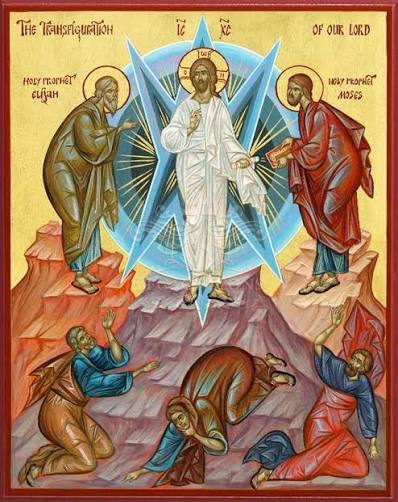
The explanation of the number of the beast requires more than just insight; it takes a leap of faith. To calculate it, you have to know why Jesus was standing on a mountain with Moses and Elias.
Matthew 17: Six days later, Jesus took Peter, James, and John, the brother of James, up on a high mountain by themselves. 2 While they watched, Jesus’ appearance was changed; his face became bright like the sun, and his clothes became white as light. 3 Then Moses and Elijah appeared to them, talking with Jesus.
First off, the disciples went to a high mountain, which symbolizes a high perspective, where we can see the world differently (from above, instead of down in the muck). There, Jesus transforms. His face shines, meaning he is in communication with God, like Moses was. Also, his clothes become white, which represents purity. In other words, he was clothed in correctness. He was doing things in the right way by taking the question in his heart to God.
The question in his heart was, what sort of Messiah shall I be? The reason Moses and Elias (Elijah) showed up is that they represent two ways Jesus saw to lead the people. He was using them for reference in order to make up his own mind.
Moses wanted to be the intercessor for everyone. He stood outside the tent and micromanaged the lives of the Israelites. He was God’s spokesperson for a people that dared not go and see for themselves (Lambs).
Moses loved the people more than the Law. He gave them a writ of divorce, contrary to God’s wishes. When God threatened to destroy them all and start over, Moses stood between the people and God, and begged God to spare them.
Elias, on the other hand, loved the Law more than the people, and never ceased telling them all the places they were getting it wrong. If God had said to him, "Stand aside so I can destroy them and start over”, I’m sure Elias would have said, “It’s about time!”
So there was Jesus, looking down on the world, with Moses loving too much on his right, and Elias loving too little on his left. Meanwhile, he was in between, deciding not to be either of them.
He would not be everyone’s personal Jesus (Intercessor). The people would need to come to him and ask for his help. Likewise, he would not place the Law above the people. His place would be somewhere in between.
Picture the three of them, Moses, Jesus, and Elias, standing side by side, then recall that the number six is the number of a man, and you can see the number of the beast for what it is. Three men, a six, a six, and a six, all standing together, with the man in the center using the lives of the other two as references for a decision he is making. That is the formula that the number of the beast represents. It is nothing more than weighing the pros and cons – how much do I love this, should I love it, how much effort am I willing to put into it? It is deciding not to love too much, or too little, but just right. It is a formula we all use every day.
We keep this formula in our heads when we make our plans, and in our hands when we execute those plans. The beast that comes out of the earth forces us to use the formula when we buy and sell, because those who are grounded always count the pros and cons before they act. Still, there is something about the beast and his number that is less than ideal. Let’s keep going to see what it is.
4 Peter said to Jesus, “Lord, it is good that we are here. If you want, I will put up three tents here—one for you, one for Moses, and one for Elijah.”
Peter really lives up to his name. He’s a bit of a blockhead. He always seems to misunderstand the situation. It’s okay, though. Jesus loves him in spite of his hard head, and so does God.
5 While Peter was talking, a bright cloud covered them. A voice came from the cloud and said, “This is my Son, whom I love, and I am very pleased with him. Listen to him!”
God is also pleased with the decision Jesus made, and the way he went about making it.
6 When his followers heard the voice, they were so frightened they fell to the ground. 7 But Jesus went to them and touched them and said, “Stand up. Don’t be afraid.” 8 When they looked up, they saw Jesus was now alone.
This verse reminds us that once we make a decision, regardless of whose example we drew on to make it, it is ours to carry, alone. That is the problem with the number of the beast. It does not leave room for leaps of faith. There is no leeway in our calculations for the movements of the hand of God. We can only count what we see, but we are blind. God, however, sees everything.
9 As they were coming down the mountain, Jesus commanded them not to tell anyone about what they had seen until the Son of Man had risen from the dead.
Remember that we are instructed to perform our alms in secret, never letting our left hand know what our right hand is doing. Likewise, we are advised to pray in private. Jesus knew what he had to become, but as we can see from Peter’s misunderstanding, his disciples did not yet have a clear picture. That would change in time. Once the disciples became Sons of Man, they would have a better understanding of who Jesus was and his purpose on earth. Until then, it wouldn’t be wise for them to put false images in the heads of others.
10 Then his followers asked him, “Why do the teachers of the law say that Elijah must come first?”
11 Jesus answered, “They are right to say that Elijah is coming and that he will make everything the way it should be. 12 But I tell you that Elijah has already come, and they did not recognize him. They did to him whatever they wanted to do. It will be the same with the Son of Man; those same people will make the Son of Man suffer.” 13 Then the followers understood that Jesus was talking about John the Baptist.
For a Son of Man, love of the Law has to come first. Abaddon’s army will try to stop us from following the path God has laid out for us. Elijah was reincarnated as John the Baptist. Even death did not alter his love for the Law. The way he lived tells us much about what he thought of people. He was happier living in the wilderness, away from them. The symbolism surrounding his story is a guide for us, as we become Sons of Man.
As I have said, the wilderness is the place we go to hear God’s voice. It doesn’t have to be a forest or desert. It is anywhere we can be alone, without the intrusive voices of other people. Some of us can find the wilderness in a crowded room. For others, it requires an actual getaway. How and where you find it doesn’t matter, so long as you get there with an ear to hear.
John the Baptist lived on a diet of locusts and wild honey. That doesn’t mean we have to give up steak. The two are symbolic. Locusts bring about change through destruction. They represent a big leap forward after a devastating event. Their swarms can decimate crops. John found spiritual nutrition, even in ruination.
Inversely, honey is sweet and packed with energy. Samson ate it from the body of a dead lion – a monarch. In other words, he seemed like he was in control of his own life, but his true strength came from his alliance with God. He was invigorated only when he killed the king inside himself. For John the Baptist, the hand of God was something to be trusted, even when it wrecked his life or the life of others.
Salome, Herod, and Herodias epitomize the kind of people Elias hated. They are wholly self-serving. Salome wants to see if she can tempt a King. Herod is willing to give up half his kingdom to satisfy his lust for her. Herodias, being a Jewish princess, is the living representation of Jacob’s words when he said Judah’s hand was on the throats of his enemies. She couldn’t stand the fact that John was talking about her. She convinces her daughter to put her own desires and future wealth aside to beg a wish that will please her Mother’s wounded pride. She sends her naive daughter to seduce a king, to make the bad man stop telling stories about her.
They were all ruthless in their pursuits. John didn’t stand a chance. His head, the seat of his logic, was served up to them on a silver platter. Still, John loved the Law more than his life. He did not tip-toe around their vanities, or lie to make them feel better. Sometimes the truth hurts, even when we don’t want it to, and speaking the truth can get us hurt. Such is the suffering of a Son of Man.
The Lamb and the 144,000
14 Then I looked, and there before me was the Lamb, standing on Mount Zion, and with him 144,000 who had his name and his Father’s name written on their foreheads. 2 And I heard a sound from heaven like the roar of rushing waters and like a loud peal of thunder. The sound I heard was like that of harpists playing their harps. 3 And they sang a new song before the throne and before the four living creatures and the elders. No one could learn the song except the 144,000 who had been redeemed from the earth. 4 These are those who did not defile themselves with women, for they remained virgins. They follow the Lamb wherever he goes. They were purchased from among mankind and offered as firstfruits to God and the Lamb. 5 No lie was found in their mouths; they are blameless.
The only thing I can tell you about the 144,000 is I’m not one of them. Perhaps in time I will see them more clearly, but for now I’m holding them up. I have heard some people use this verse to argue that seating in heaven is limited, and I know that some Christians are looking forward to watching sinners burn on Judgment Day. The truth is, every day is judgment day. Every minute, the world ends for someone, and out of the billions of lives that have been lived on the earth, the chances of any of us being among the greatest gross are slim to none. I call them the greatest gross because 144 is a gross, or 12 x 12, while a great gross is 1,726. 144,000 is 12,000 x 12,000.
We know that the number 12 in the scriptures usually has something to do with the 12 tribes. Jesus and John, unlike Paul, weren’t trying to save the Gentiles, even though in their day the northern ten tribes of Israel were scattered, leavened by the Lord among all the nations of the world.
So do these 144,000 represent the best of the twelve tribes? Maybe. Let’s delve into their symbolism and see what we can come up with, while we wait for God to clarify their faces for us.
First off, they are standing on Mount Zion, which is where King David’s tomb is rumored to rest. It was the location of the City of David; the Ark of the Covenant was once placed there. It is often used as a symbol for Jerusalem, and it’s said to be God’s dwelling on earth. The Last Supper is said to have been held there, and most notably, there is a church there that celebrates the “falling asleep” of Mary.
I know most people wouldn’t say that Mary’s death and resurrection into heaven is the most notable thing to happen on that mountain, but they aren’t interpreting Revelation the way I am. Remember that the dragon and the beasts are Mary’s perceptions of what her son might become, and they serve as warnings to us not to read too much into the words and actions of Jesus, but to let God reveal the truth about the first Son of Man to us.
Like Jesus, Mary is believed to have been taken into heaven in her physical body, after she died. We know that heaven is a state of mind, and that dying in the scriptures typically refers to a spiritual death. Therefore, Mount Zion is the place where Mary finally had her moment.
Mary saw in her son someone greater than King David, because Jesus was able to explain to her what David was truly like. In truth, he wasn’t any better at being king than Saul was, because he was just a man with all the vanities men possess.
We know that Jesus was a wine bibber. He confessed to that himself. We can guess that he struggled with his pride, and that he wounded people with his tongue. Still, he had something going for him. He had a father who could guide him, and so do we.
The sound of rushing waters represents truth coming from many sources. The voice of God is said to sound like many waters. In this verse, He is speaking to Mary, assuring her that her son is on the right path. The peal of thunder, minus the lightning, is clarification without the epiphany. Thunder, itself, is the sound of lightning echoing off of the surrounding objects. Objects are made of matter. See where I’m going with this? Mary’s concerns are being clarified in a frightening way, but not with a flash of light.
John goes from describing the sound from heaven as the rushing of water, to a peal of thunder, then finally to harpists playing their harps. The only thing these things have in common is that they contain various notes that all proceed from the same source. Rushing water is just a bunch of splashes. Thunder is the echo of torn, sizzling air, and harps have strings that are all plucked by the harpist to make music. These three observations tell us how Mary’s perception changed from dissonance to fear to beautiful music.
In Mary’s heaven (her heart, which is the seat of her authority), a new song was being sung. It was before the four nations and the elders, whose symbolism we already know. Still, we don’t know who the 144,000 are, or why only they can learn this song. Perhaps Mary thought seating in heaven was limited? She was Jewish, and raised to think that her people were the chosen of all the people of the world. Or, perhaps she only saw value in innocence?
We know the 144,000 are men, because they have not defiled themselves with women. The problem is, getting married is not defiling yourself, is it? Aren’t we commanded to go forth and multiply? How then is marriage the same as defiling ourselves? Is God telling us to make ourselves impure? If so, aren’t these 144,000 ignoring His commandments?
I think it’s obvious that they symbolize something else, which I still cannot get my head around. I do know that defiling is the same as polluting. In order to become one with another person (our spouse), we have to take them into us, and put ourselves into them. That’s what it means to defile ourselves. We ruin the purity of what we were, and become something else, the same way that tea leaves defile pure water. That doesn’t mean the defiled thing is worse. We cannot assume evil just because of the way our minds interpret a word. Most people would agree that tea (or coffee, or soda, or whatever your preferred water-based drink) is tastier than water.
I learned from the story of Lot that the word virgin is often mistranslated in scriptures. It simply implies naivety. Women, we know, are like water, and water is a philosophical belief. Knowing that, I still can’t see the faces of the 144,000. Perhaps one of you will see them and enlighten the rest of us?
A lie is only a lie if you know you are lying. In other words, if you believe wholeheartedly that what you are saying is the truth, then it is not a lie, and you cannot be called a liar. We are all blind to the whole truth. Perhaps that is why I cannot see all of Revelation’s truth? Some of it might be for others to unlock. Some of you might not believe the things I do see. You might think I am completely wrong. That’s fine. We all say things that sound like lies in the ears of others. Even Jesus sounded like a liar to those who understood a different truth.
The Sanhedrin was not wrong to label him a blasphemer. In accordance with their understanding, he was. There are no liars in heaven, because the truth is openly obvious to everyone.
The Three Angels
6 Then I saw another angel flying in midair, and he had the eternal gospel to proclaim to those who live on the earth—to every nation, tribe, language and people.
I believe the word “midair” is more important than it seems in this verse. First off, this angel (messenger or message) is flying, which implies both of its wings are working together. This means that Mary is starting to work with God to see her son correctly. However, the angel is in midair, which means she is still not fully convinced. The message is not yet grounded. She is still on the fence, but she’s coming around.
We have already discussed nations, languages, tribes, and people. The eternal gospel is the good news that never dies. Matthew 12:31 tells us that every kind of sin can be forgiven, but blasphemy against the Holy Spirit will not be forgiven. To understand this, we must know what the Holy Spirit is. It’s simple. It is God’s intention toward us. It is the spirit in which we believe He is acting. Therefore, blaspheming against the Holy Spirit is doubting that God has our best interests in mind.
Forgiving is not the same as forgetting. God will not forget any of our sins. He will, however, move them to the back of His mind. That’s what forgiveness entails. We set aside what we know about a person, so that we can start fresh with them. It’s more of an omission. We simply refuse to let their past be a stumbling block to our future.
The reason God doesn’t forgive (put away) our incorrect observations about His intentions is, that He wants us to be reminded of our own blindness. In the above verse, Mary is being reminded of God’s good intentions toward mankind.
7 He said in a loud voice, “Fear God and give him glory, because the hour of his judgment has come. Worship him who made the heavens, the earth, the sea and the springs of water.”
Don’t let the word judgment scare you. If you make spaghetti, and you watch it so that it is cooked to perfection, then you have judged your spaghetti at every stage of the cooking process. God is doing the same with us, except His judgments aren’t for His benefit; they are for ours. He isn’t telling Himself, I think this one is done. Instead, He is telling us, it’s time for you to move to the next stage of your development. In this verse, Mary is moving forward to a new way of seeing the world and her son.
Recall, also, that worship simply means to show or express adoration or reverence for a deity, and a deity, or god, is something we perceive as supernatural. This messenger wants to remind Mary that God knows more than she does and is active in the world, and since His intentions are good, she should trust him.
Heavens are pleasant places, where we are at peace. The earth is solid ground that we can safely stand on. The sea is a large body of salty water, which represents philosophy made bitter by worldly experience. Springs of water are fresh sources of clean philosophies that bubble up out of the world, instead of falling from above. God is credited with making all of these things, and through them Mary can see His true greatness.
8 A second angel followed and said, “‘Fallen! Fallen is Babylon the Great,’ which made all the nations drink the maddening wine of her adulteries.”
Babylon is known for its massive city walls and its hanging gardens. This tells us something about the inhabitants of that great city. Number one, they were afraid of strangers and the world that surrounded them. Number two, they didn’t like to bend down to dig in the dirt. In fact, we can imagine that they went to great lengths to keep their plants off the ground. If you have ever dealt with a raised flower bed, you know that they can be nice, but they require much more work than the normal kind.
In this verse, Babylon symbolizes the person Mary was. I’m sure that she felt walled off from those around her, seeing as how she was picked to carry and raise the savior of the world. She held him off the ground, just like the Babylonians did with their gardens, but when her great city walls fell, she was forced to bring her son down to earth.
Wine is a manufactured drink. To make it, you have to crush fruit and let it sort of… rot. Can you see the symbolism in that? Fruits are sweet gifts from the world. They are pleasant ideals that get trodden into a mash that, once fermented, makes us tipsy.
Mary’s perspective was off balance because of her adulteries. That doesn’t mean she cheated on her husband. It means she engaged in fanciful delusions. Adultery requires fantasy. To engage in it, we have to convince ourselves that the grass is greener on the other side of the fence. Well, Mary’s fences (the walls of her Babylon) fell down. Fortunately, it wasn’t her marriage that suffered, only her nations, which we have already discussed. She couldn’t fly, because of her drunken state – not high, anyway. She was trapped in midair. It was an angel who made her aware of her inebriation, and sobered her up.
9 A third angel followed them and said in a loud voice: “If anyone worships the beast and its image and receives its mark on their forehead or on their hand, 10 they, too, will drink the wine of God’s fury, which has been poured full strength into the cup of his wrath. They will be tormented with burning sulfur in the presence of the holy angels and of the Lamb. 11 And the smoke of their torment will rise for ever and ever. There will be no rest day or night for those who worship the beast and its image, or for anyone who receives the mark of its name.” 12 This calls for patient endurance on the part of the people of God who keep his commands and remain faithful to Jesus.
This sounds absolutely terrifying, even though it’s not. We already know that the beast and his number and his image have problems. Weighing the pros and cons doesn’t leave room for leaps of faith. It’s a mental exercise that omits communication with God. It is us, trying to figure it all out, without any help. A beast is an animal that never looks up.
When we make our plans and put them into action without God, we face His fury and His wrath. To get a picture of what that looks like, let’s examine those two words. Fury is wild or violent anger, while wrath is extreme anger. And what do gods do when they get angry? They smite us with lightning bolts, of course.
Sulfur is a yellow, stinky, brittle element. In this verse, it’s on fire, which represents scrutiny. In other words, we will be tormented because of our brittle, stinky perception. The yellow color means we will think we are doing the best we can do, even though God’s messengers are telling us otherwise.
Smoke is matter-laden air, which symbolizes our own concerns that blur our vision and affect our breathing (We live by every breath that proceeds from the mouth of God). As long as we keep relying on our own calculations, we will have no peace. Think about it, and you’ll see that it’s true.
People who think they have to do it all themselves are constantly worried about everything. They lose a lot of sleep trying to figure out how to make all the numbers add up. It is only when we place our concerns in God’s hands that we find the rest we need. To do this, we have to be patient and endure. We have to let God work His magic in our lives, knowing we can’t rush it. We are not beasts. We are Sons of Man, learning to march to a drum beat.
13 Then I heard a voice from heaven say, “Write this: Blessed are the dead who die in the Lord from now on.”
Mary isn’t the only one whose perceptions of Jesus changed over time. John’s did, as well, and so will ours. That’s what revelation is all about. He is revealing himself to us, and that takes time and patience.
One definition of the word blessed is “highly fortunate”, and that is what we truly are. We die in the spirit, again and again, along the path of revelation. At this moment, on that road, we begin to understand the great gift we are being given. The book of Revelation is a roadmap that marks the pitfalls we might encounter as we get to know Jesus. It is Dating for Dummies. We’ve come through a lot, but we aren’t done yet.